
After a collision, the visible damage on the outside of your vehicle tells only part of the story. The structural frame underneath carries the full weight of your safety, and damage to it affects every connected system in the car. Handling shifts, safety features stop performing as designed, and driving with unaddressed structural damage makes those problems worse over time. Whether the impact was a low-speed parking lot collision or a highway accident, the frame deserves the same attention as the panels and paint.
Drivers across Covina and the San Gabriel Valley have relied on VMS Auto Collision Center for professional auto body repair since 1989. Our process relies on computerized measuring systems and manufacturer-approved procedures, refined over 35 years of restoring vehicles to factory specifications for the drivers we serve.
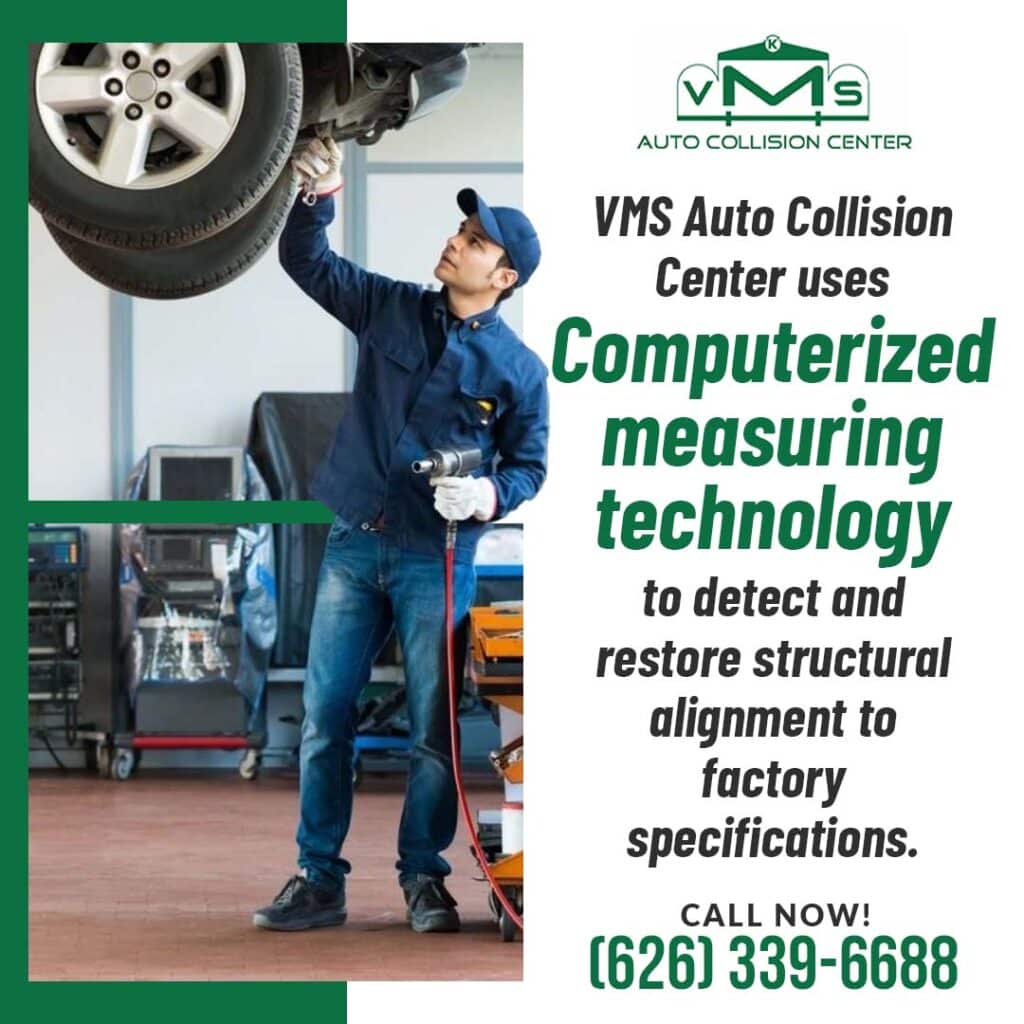
Two Types of Vehicle Frame Construction
Most modern passenger cars, crossovers, and minivans use unibody construction. It’s a design where the body and frame are manufactured as one integrated unit. Trucks and some larger SUVs use body-on-frame construction, where a separate steel frame sits beneath the vehicle body, and the two are bolted together.
This distinction matters when auto body repairs are needed. In a body-on-frame vehicle, damage to the outer body does not necessarily compromise the frame beneath it. In a unibody vehicle, the body and frame are inseparable. Damage to one section affects how structural load is distributed across the entire unit.
Unibody construction allows manufacturers to engineer crumple zones into the frame. Crumple zones are sections of the vehicle specifically designed to absorb and redirect collision energy away from the passenger cabin during an impact. When a unibody frame is repaired incorrectly, those engineered zones may no longer perform as the manufacturer intended. The vehicle may look and drive the same, but its ability to protect occupants in a future collision is no longer verified.
Indicators of Frame Damage
Frame damage is any bending, twisting, or compression of a vehicle’s structural support system. It does not require a high-speed crash to occur. Low-speed rear-end impacts, parking lot collisions, and sideswipes can all produce structural damage that is invisible from the outside.
Even small variations from factory specifications alter how weight is distributed across suspension components and tire contact points. Common indicators of frame damage include:
- Doors, trunk lids, or hoods that no longer close flush or seal properly.
- Uneven or inconsistent gaps between body panels.
- Persistent vehicle pull to one side during straight-line driving.
- Uneven tire wear that continues after a wheel alignment service.
- Unusual vibrations, sounds, or handling changes that began after a collision.
None of these symptoms can be confirmed as structural without a professional inspection using computerized measuring equipment. A visual assessment alone is not reliable enough to determine whether the frame has been affected.
Professional Frame Repair Process
Professional frame repair follows a structured sequence designed to restore factory specifications, not approximate them. Each stage builds on the previous one and is documented from start to finish.
Stage One: Digital Measurement and Damage Mapping
The repair process starts with a full computerized measurement scan. These systems compare hundreds of reference points across the vehicle’s frame against manufacturer specifications stored in a database, identifying every deviation before any repair work begins.
Older shops relied on manual gauges placed at selected points on the vehicle. Results depended on which areas a technician chose to measure and their individual experience interpreting the readings. Damage in areas that were not measured went undetected until it created problems later.
Modern digital systems remove that gap. Every deviation from factory specification is identified, documented, and mapped before the first repair is made. This produces an accurate scope of work, a reliable estimate, and a baseline record that is compared against final measurements once repairs are complete.
Stage Two: Hydraulic Frame Straightening
Once the damage is mapped, technicians use a hydraulic frame machine to apply controlled force at precise angles, gradually returning the frame to its original geometry.
What separates modern frame straightening from older methods is real-time digital feedback. The computerized measuring system monitors frame position continuously as force is applied. Technicians see measurements update in real time and stop exactly when the frame reaches factory specifications.
The older pull-and-check method required technicians to apply force, stop, measure manually, and then repeat. That process left room for over-correction and under-correction. Either outcome could send a customer back to the shop with new complaints. Real-time monitoring removes that uncertainty.
Stage Three: Section Replacement When Required
When damage is too severe to straighten, technicians cut out the compromised section and weld in new material. This work follows manufacturer-specific repair procedures that define allowable cut locations, required welding methods, and approved materials.
This stage requires trained technicians, not just equipment. Modern vehicles use high-strength steel (HSS) and advanced high-strength steel (AHSS). These materials behave differently under heat than conventional mild steel. Applying incorrect welding techniques to these materials can reduce their strength rather than restore it. I-CAR, the Inter-Industry Conference on Auto Collision Repair, sets the training standards that address these material-specific procedures. I-CAR Gold Class is the benchmark credential that verifies a shop’s technicians maintain current knowledge in these areas.
Stage Four: Final Verification and Documentation
After repairs are complete, the digital measuring system runs a second full scan. This confirms that every corrected point matches factory specifications before body panels are reassembled.
The final scan produces a documented report. That report becomes part of the vehicle’s repair record and serves as verifiable evidence that structural restoration was completed to manufacturer standards. This documentation is relevant to your safety and to your vehicle’s value at the time of resale.
How Frame Damage Affects Vehicle Safety Systems
Frame damage not only affects how your car handles, but it also affects the systems built to protect you in a collision.
ADAS Sensor Calibration
ADAS stands for Advanced Driver Assistance Systems. This includes features such as automatic emergency braking, lane departure warnings, blind spot monitoring, and adaptive cruise control. These systems rely on cameras and radar sensors mounted in precise locations throughout the vehicle, many of them attached to bumper covers, windshields, and body panels that connect to the frame.
When a collision shifts these mounting points, even slightly, the sensors fall out of calibration. A warning light on the dashboard may clear after the repair, but the underlying system may no longer function correctly. Starting in 2029, NHTSA’s new federal standard (FMVSS 127) will require automatic emergency braking on all new light vehicles sold in the United States. As these systems become standard across all vehicles, proper ADAS recalibration after any structural repair becomes a required part of professional auto body repair service, not an optional add-on.
Airbag Deployment Sensors
Airbags are triggered by impact sensors positioned throughout the vehicle, many of which are mounted to frame components. Structural damage that shifts these sensors can affect when and how airbags deploy in a subsequent collision. They may deploy too slowly, fail to deploy, or activate when the conditions do not require it.
Suspension and Steering Geometry
Suspension mounting points attach directly to the frame. When the frame is out of specification, wheel alignment cannot be corrected properly at the root level. The symptoms persist: tires wear unevenly, the steering pulls, and handling degrades in ways that are difficult to diagnose without tracing the cause back to the underlying structure.
Why Repair Quality Directly Affects Long-Term Safety
Two vehicles with identical accident histories can carry very different safety outcomes depending on how the structural repair was performed.
A shop that uses digital measurement, follows manufacturer repair procedures, and works with properly trained technicians produces a verifiable result: the frame is back to factory specification, the crumple zones are intact, and the ADAS sensors are recalibrated. A shop that skips measurement, uses incorrect materials, or lacks current training produces a vehicle that looks repaired but may not be structurally sound.
The difference is not always visible. Paint can hide improper welds. Panels can close correctly without the frame being aligned. This is why verifiable credentials matter when selecting a facility for structural auto body repair.
Selecting an Auto Body Shop for Frame Repair
Not every auto body shop has the equipment or training required for structural repairs. The following criteria are verifiable and practical when evaluating a facility.
Computerized Measuring Equipment
Frame repair requires digital measurement systems, not manual gauges or visual estimation. Ask whether the shop provides a documented pre- and post-repair measurement report as part of the repair. This report is your written confirmation that the structural repair was completed to manufacturer standards, not just a technician’s best judgment.
I-CAR Gold Class Recognition
This industry credential requires ongoing training across all repair roles, including structural technicians and estimators. It reflects a shop’s commitment to current procedures for advanced materials and electronic safety systems. It is independently maintained and verifiable.
Manufacturer Network Certifications
Manufacturer network certifications verify that a shop meets the equipment and training standards required to repair specific vehicle brands to manufacturer specifications. These programs are brand-specific, independently audited, and reflect a higher standard of accountability than general shop credentials alone.
Written Warranty Coverage
A facility that stands behind its structural work provides written documentation. A limited lifetime warranty on workmanship is a stronger commitment than a short-term policy and reflects a shop’s confidence in its repair process.
Complete Repair Documentation
A qualified auto body shop provides digital measurement reports, OEM (Original Equipment Manufacturer) parts receipts, before-and-after photos, and warranty certificates at pickup. This documentation protects your vehicle’s value and gives future buyers verifiable proof of the work performed.
Frame Damage Repair at VMS Auto Collision Center in Covina
VMS Auto Collision Center has served Covina and the San Gabriel Valley since 1989. Structural repair is part of our core auto body repair service, delivered through a six-step process that includes digital frame measurement at intake, real-time hydraulic straightening, ADAS recalibration where required, and a final verification scan before delivery.
Credentials and Training
Our I-CAR Gold Class recognition reflects continuous technician training in structural repair, including current procedures for high-strength steel and advanced safety system calibration. VMS Auto Collision Center carries an A+ rating from the Better Business Bureau and has operated as a family-owned auto body shop in Covina for over 35 years, with three generations involved in day-to-day operations.
Warranty and Claims Support
Every structural repair is backed by a Limited Lifetime Warranty covering workmanship for as long as you own your vehicle. We work directly with your insurance company to manage the claims process from first notice through final delivery, and we coordinate rental car assistance to keep you mobile while your vehicle is being restored.
Repair Documentation
At VMS Auto Collision Center, we provide complete repair documentation with every job, so you leave with the records needed to protect your vehicle’s value. It includes digital measurement reports, OEM parts receipts, before-and-after photos, and a warranty certificate.
Frequently Asked Questions
Can frame damage be repaired without filing an insurance claim?
Yes. You are not required to file an insurance claim to have frame damage repaired. Some vehicle owners choose to pay out of pocket to avoid a permanent record on their vehicle history report. A professional auto body repair service can assess the damage and walk you through your options before any claim decision is made.
What is the difference between frame damage and structural damage?
The terms are often used interchangeably, but there is a distinction. Frame damage refers specifically to bending or deformation of the vehicle’s primary structural support. Structural damage is a broader term that can include damage to reinforcement components, floor pans, firewall sections, and other load-bearing parts connected to the frame. Both require professional inspection and repair using computerized measuring equipment.
How do I know if a used vehicle I am buying has had frame damage?
Start with a vehicle history report from services such as Carfax or AutoCheck, which document reported accidents tied to the vehicle’s VIN. Follow that with a pre-purchase inspection at a qualified auto body shop, where technicians can use paint thickness gauges and computerized measuring tools to identify repairs that may not appear in any report.
Does frame repair affect a vehicle’s factory warranty?
Frame repairs performed by a certified auto body repair service using OEM parts and manufacturer-approved procedures should not void a factory warranty. However, repairs completed with non-OEM parts or outside of manufacturer repair guidelines may affect warranty coverage on related components. It is advisable to confirm repair procedures with both the repair facility and your vehicle’s dealership before work begins.
Schedule a Frame Inspection in Covina
If your vehicle was involved in a collision, a professional structural inspection is the right next step, regardless of how the damage appears on the surface. As your trusted auto body shop in Covina, VMS Auto Collision Center is here to help you get your vehicle safely back on the road. We provide structural collision repair, insurance claim assistance, and rental car coordination, so every part of the process is handled for you from start to finish. Call (626) 339-6688 or email info@vmsautocollision.com to schedule your inspection.