
Vehicle dents come in distinct forms, each requiring specific repair techniques to restore your car’s appearance and value. Door dings, round impacts, sharp creases, hail damage, and collision dents present unique challenges based on their depth, location, and whether paint remains intact. Covina vehicle owners encounter these dent types from parking lot accidents, severe weather, falling debris, and traffic collisions that compromise panel surfaces.
At VMS Auto Collision Center, our technicians assess the characteristics of each dent to recommend the most effective car dent repair approach. The following sections break down each dent category by appearance, common causes, and the professional techniques our team uses to restore damaged panels.
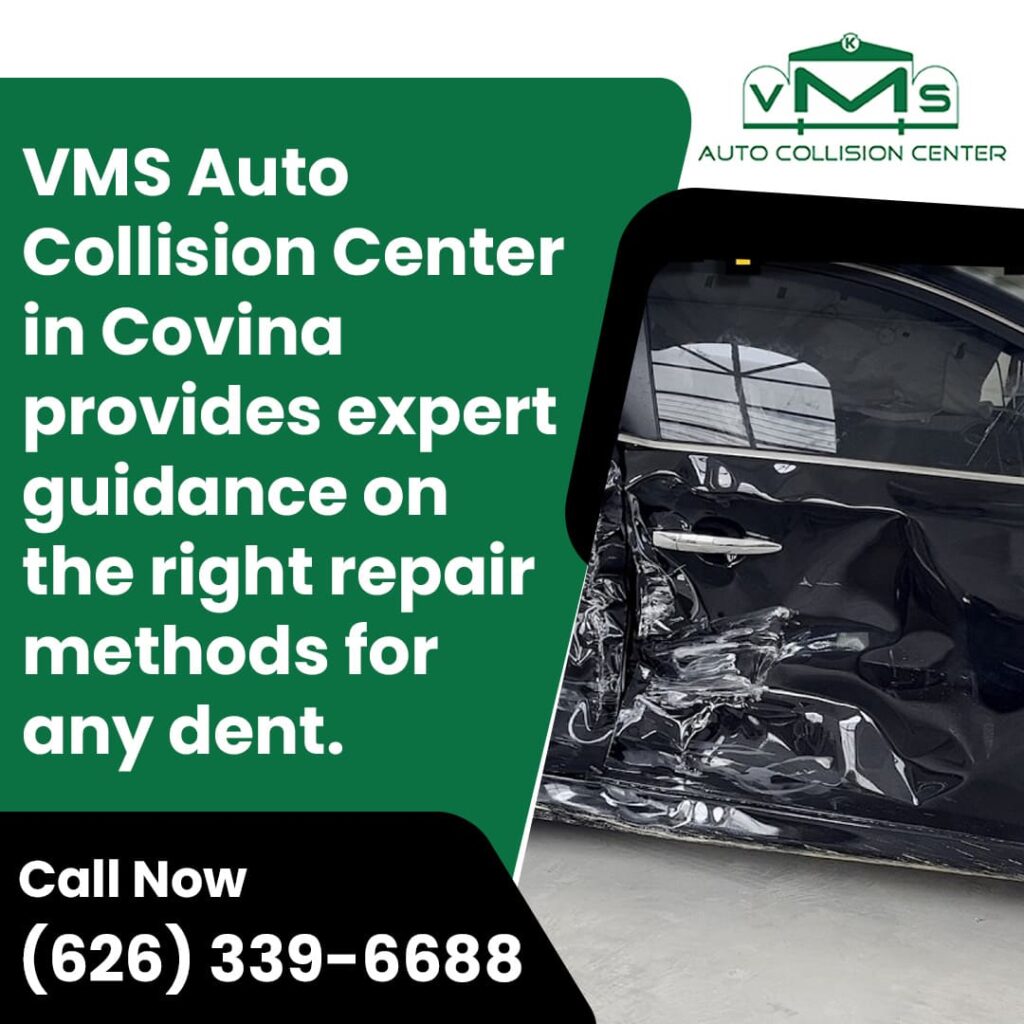
Common Vehicle Dent Categories
Door Dings
Door dings are small, round depressions caused by adjacent vehicle doors striking your panels in parking situations. These impacts typically measure one to three inches in diameter and occur on door panels, fenders, and quarter panels at handle height.
Door dings create shallow depressions with smooth, rounded edges. The metal compresses inward without sharp creases or folded edges. Paint usually remains intact because the impact spreads force across a broader surface area rather than concentrating pressure at a single point.
These dents appear most frequently on driver and passenger doors where other vehicles park close by. Shopping center parking lots, apartment complexes, and crowded parking garages create conditions where door contact occurs regularly.
Round Dents
Round dents result from blunt object strikes that compress metal in a circular pattern without creating sharp edges. Shopping carts, falling branches, and sports equipment create these depressions that range from two to six inches in diameter.
Blunt objects striking panels at perpendicular angles produce round dent formations. The impact distributes force evenly across the contact area, pushing metal inward uniformly. Shopping carts rolling into parked vehicles create classic round dent patterns on doors and quarter panels.
Falling tree branches during storms generate larger, round dents on horizontal surfaces like hoods, roofs, and trunk lids. Baseball impacts, basketball strikes, and other recreational equipment also produce round depressions when making contact with vehicle panels.
Creased Dents
Creased dents form sharp, linear depressions where metal folds along a defined edge or line. These occur when narrow objects strike panels or when collision forces concentrate pressure along body lines and character edges.
Creased dents develop when impacts fold metal rather than simply compressing it. Shopping cart corners, bicycle handlebars, and angular objects create linear damage patterns that follow the contact edge. Collision impacts along body lines produce creases where reinforcement structures concentrate force.
The folded metal creates a distinct ridge or valley along the crease line. Paint cracks frequently accompany creased dents because the sharp fold exceeds the paint system’s flexibility limits. Creases crossing character lines or body panel edges present particular challenges. These areas contain double-panel construction or reinforcement structures that complicate access and repair procedures.
Hail Damage
Hail damage creates numerous small, round dents across horizontal and angled surfaces when ice pellets strike vehicles during storms. These impacts typically measure one-half inch to two inches in diameter and appear in concentrated patterns on hoods, roofs, and trunk lids.
Hailstorms produce distinctive damage patterns. Horizontal surfaces receive the most direct impacts, showing higher dent density than vertical panels. Hail size correlates directly with dent depth and severity.
Multiple impacts across large surface areas create repair challenges different from single-dent situations. Paint integrity assessment becomes critical because widespread surface stress may compromise the coating system even when individual dents appear repairable through paintless dent repair (PDR) methods.
Extreme Collision Dents
Extreme collision dents involve severe panel deformation from high-speed impacts that may compromise structural integrity beneath visible surface damage. These dents extend beyond cosmetic concerns, potentially affecting vehicle safety systems and crash protection capabilities.
Collision damage requires a thorough structural evaluation beyond visible panel assessment. Modern vehicles incorporate crumple zones designed to absorb impact energy and protect passenger compartments. Severe dents in these areas indicate potential frame damage, bent reinforcement members, or compromised structural components.
Professional assessment uses computerized measuring systems that compare vehicle dimensions against manufacturer specifications. These measurements identify structural shifts invisible through visual inspection alone. Frame damage requires immediate attention because misaligned structures affect handling, tire wear, and crash protection performance.
Each dent category presents distinct repair challenges that require different approaches and timelines. Recognizing these damage patterns helps you communicate effectively with professionals offering dent repairs near you and sets realistic expectations for restoration outcomes.
Professional Repair Methods Explained
Paintless Dent Repair (PDR)
Paintless dent repair reshapes damaged metal from behind panels using specialized tools while preserving original paint. Technicians gain access to the dent’s backside either through natural vehicle openings like door frames or by carefully removing interior panels that cover the damaged area. Specialized metal rods are used to apply controlled pressure from behind the damaged area to gradually restore the panel to its original contour.
The process preserves your vehicle’s factory paint finish. Technicians use LED lighting systems that reveal subtle surface variations invisible under standard conditions. These lighting tools show metal deformations during the reshaping process, allowing precise correction.
Best for: Door dings, round dents, and hail damage where paint remains intact. The metal must have accessible backside panel areas for tool positioning. Shallow depressions under one-quarter inch deep respond best to PDR applications.
Timeline: Simple door dings require one to two hours. Standard round dents take two to four hours. Extensive hail damage affecting dozens of impact points requires several days, even with PDR methods. These timeframes may vary depending on factors like panel material, dent location, the number of damaged areas, and current shop workload.
Limitations: PDR cannot repair creased dents where metal has folded, paint cracks or chips, deep impacts that stretched metal beyond recovery, or areas with limited backside access.
Traditional Bodywork and Refinishing
Traditional bodywork involves metal reshaping, body filler application, surface preparation, and complete paint system restoration. The car dent repair process begins with careful metal reshaping using specialized hammers, dollies, and picks. For creased dents, technicians work the crease from multiple angles to gradually unfold the metal and restore approximate original contours.
Body filler application smooths remaining surface irregularities after metalwork is completed. Professional dent repair technicians apply filler in thin layers, allowing proper curing between applications. This prevents future cracking or separation issues that occur with thick filler applications.
Surface preparation includes progressive sanding through multiple grit levels. Technicians start with coarser grits to shape filler and transition to finer grits that create smooth surfaces ready for primer and paint. The refinishing process uses computerized color-matching systems to formulate paint that precisely matches your vehicle’s original finish.
Best for: Creased dents with sharp folds, any damage where paint is cracked or chipped, deep round dents that stretched metal, door dings with limited panel access, and hail damage where paint integrity is compromised.
Timeline: Traditional repairs typically require three to five days for completion. Metal reshaping and filler application occupy the initial work period, while paint system application follows with a specific drying time between coats.
Advantages: Works on any dent type regardless of paint condition, restores structural integrity completely, and addresses multiple damage types simultaneously.
Structural Collision Repair
Structural repair addresses severe panel deformation and hidden frame damage from high-speed impacts. Frame straightening equipment applies controlled forces to restore structural alignment before panel repairs begin. This foundational work maintains proper vehicle geometry and safety system positioning.
Computerized measuring systems compare vehicle dimensions against manufacturer specifications. These measurements identify structural shifts that are invisible during visual inspection. Frame damage requires immediate attention because misaligned structures affect handling, tire wear, and crash protection performance. Panel replacement becomes necessary when metal stretching or tearing exceeds repair limits.
Advanced Driver Assistance Systems (ADAS) often require recalibration after collision repairs. Cameras, radar sensors, and other components mounted in or near damaged areas need precise alignment for proper function.
Best for: Extreme collision dents affecting crumple zones, damage indicating potential frame misalignment, impacts to areas containing safety system components, and any severe deformation requiring panel replacement.
Timeline: Collision damage repairs extend across one to three weeks, depending on severity and parts availability. Structural work requires careful measurement and adjustment procedures that maintain quality and safety standards.
Critical for: Maintaining vehicle safety certifications, preserving crash protection capabilities, and restoring proper handling characteristics.
Hybrid Repair Approaches
Some damage situations benefit from combining repair methods. Larger round dents exceeding four inches in diameter may require hybrid approaches that use PDR techniques for initial metal reshaping with limited refinishing work to address stress cracks or paint damage at the dent’s outer edges.
Hail damage presents another hybrid scenario. When most impacts preserve paint integrity, but a few create cracks, technicians use PDR for intact areas and spot refinishing for damaged sections. This approach maintains the factory finish across maximum surface area while addressing compromised sections.
At VMS Auto Collision Center, our technicians evaluate each damage situation individually to determine whether single-method or hybrid approaches deliver superior results for your specific vehicle.
Selecting the Right Repair Method
Professional damage assessment prevents inappropriate repair technique selection that leads to unsatisfactory results. At VMS Auto Collision Center, our technicians evaluate multiple factors during initial inspection to determine the most effective restoration approach for your specific situation.
- Paint condition analysis measures coating thickness and identifies previous repairs that affect technique selection. Paint thickness gauges reveal refinished areas and factory coating variations that influence PDR feasibility. Intact factory paint responds better to metal reshaping procedures than thinner refinished surfaces prone to cracking.
- Metal stress evaluation identifies damage severity beyond surface appearance. Stretched metal loses its elastic properties and cannot return to its original shape through PDR alone. This condition requires traditional bodywork with metal reshaping and filler application.
- Panel accessibility verification determines whether technicians can position tools properly to provide effective dent repairs. Limited access situations may eliminate PDR as an option regardless of other favorable damage characteristics.
These assessment factors work together to create a complete damage profile that guides repair decisions. Reputable facilities offering dent repairs near you invest in diagnostic equipment and trained technicians who can accurately evaluate all these variables before beginning work.
Professional Assessment Benefits
Accurate damage evaluation establishes realistic repair expectations and prevents mid-project surprises. At VMS Auto Collision Center, we follow a systematic assessment process that examines all damage aspects before providing estimates that reflect true restoration requirements.
We use advanced diagnostic equipment to identify issues invisible through basic visual inspection. Paint thickness measurements, structural alignment checks, and electronic system scans reveal hidden damage that affects the repair scope. This thorough evaluation prevents discovering problems during repair work that force timeline extensions.
We provide written estimates that detail required procedures and expected timelines. This documentation establishes clear expectations and provides references for evaluating completed work quality. Our transparent approach eliminates confusion about the repair scope.
Why Professional Repair Outperforms DIY Attempts
Dent repair kits marketed for home use lack the specialized tools and training necessary for quality results. These products work only on the most minor, shallow dents with perfect paint condition and ideal accessibility. Most real-world damage situations exceed the capabilities of a basic dent repair kit.
Professional equipment includes specialized lighting systems, precision measurement tools, and manufacturer-specific repair implements unavailable in consumer kits. Proper tools deliver results that maintain vehicle value and appearance standards.
Improper repair attempts risk creating additional damage. DIY efforts may crack paint, stretch metal, or damage surrounding areas while trying to address the original dent. These complications require more extensive corrective work than proper initial repair would have needed.
Professional repair facilities back their work with warranties that protect you against defects, premature failure, and workmanship issues. These guarantees provide financial protection and peace of mind that DIY dent repairs cannot match. At VMS Auto Collision Center, our Limited Lifetime Warranty covers all repairs for as long as you own your vehicle, demonstrating our confidence in workmanship quality and protecting your investment against future problems.
Schedule Your Professional Dent Assessment in Covina
Identifying dent types and selecting appropriate dent repair methods helps you make informed restoration decisions. Professional evaluation determines the most effective approach for your specific damage while providing an accurate timeline and process information.
Contact VMS Auto Collision Center at (626) 339-6688 or email info@vmsautocollision.com for professional dent repairs near you. Our experienced technicians serve Covina and surrounding communities with expert collision repair backed by I-CAR Gold Class certification and a BBB A+ rating.