Vehicle repairs today require precision that older methods simply cannot achieve. A minor alignment error can cause your doors to leak, tires to wear unevenly, or safety systems to malfunction. Traditional measuring tools like tape measures and manual gauges rely on a technician’s guesswork, often missing problems until after you drive your car home.
Modern auto body repair facilities use computerized equipment that removes human error and delivers exact factory specifications. These digital tools detect hidden damage, verify repairs are correct, and provide documented proof of quality work. At VMS Auto Collision Center, we’ve invested in advanced technology to deliver the precision modern vehicles demand. The difference shows in the results. Shops using old methods produce vehicles with misaligned panels, paint that doesn’t match, and safety features that don’t work properly. Technology-equipped facilities restore your vehicle to its original condition with measurable accuracy.
Why Precision Matters More Than Ever
Modern Vehicles Need Modern Solutions
Cars built today are completely different from vehicles made even ten years ago. Your vehicle contains dozens of computers, cameras, and sensors that control everything from braking to parking. These systems must be positioned perfectly to work correctly.
Older repair methods cannot handle the complexity of modern vehicles. A technician with a tape measure cannot detect a 2-millimeter misalignment that causes your lane departure warning to stop working. Manual tools miss the frame damage that leads to premature tire wear.
Industry research shows that vehicles equipped with forward collision warning and automatic emergency braking systems have been associated with reductions in police-reported front-to-rear crashes of up to around 50% and corresponding reductions in injury crashes, depending on vehicle and conditions. However, these systems rely on precise sensor alignment and calibration; if sensors are moved or disturbed during repairs and not recalibrated, the effectiveness of the systems can be compromised.
The Problem With Traditional Methods
Traditional auto body repair relied on visual inspection and manual measurement. A technician would eyeball panel gaps, use a straightedge to check alignment, and mix paint colors by comparing samples under a light. This approach worked acceptably when cars were simpler.
Today, that same approach fails. Frame rails must align within millimeters. Paint must match not just in color but in metallic flake orientation. Safety cameras must point in exact directions. Human eyes and hands cannot achieve this level of accuracy consistently.
The results of outdated methods include doors that don’t close properly, paint that looks different in sunlight, and warning lights that won’t turn off. Many customers end up returning to shops multiple times for the same problem.
Computerized Measuring Systems Replace Guesswork
Exact Measurements Instead of Estimates
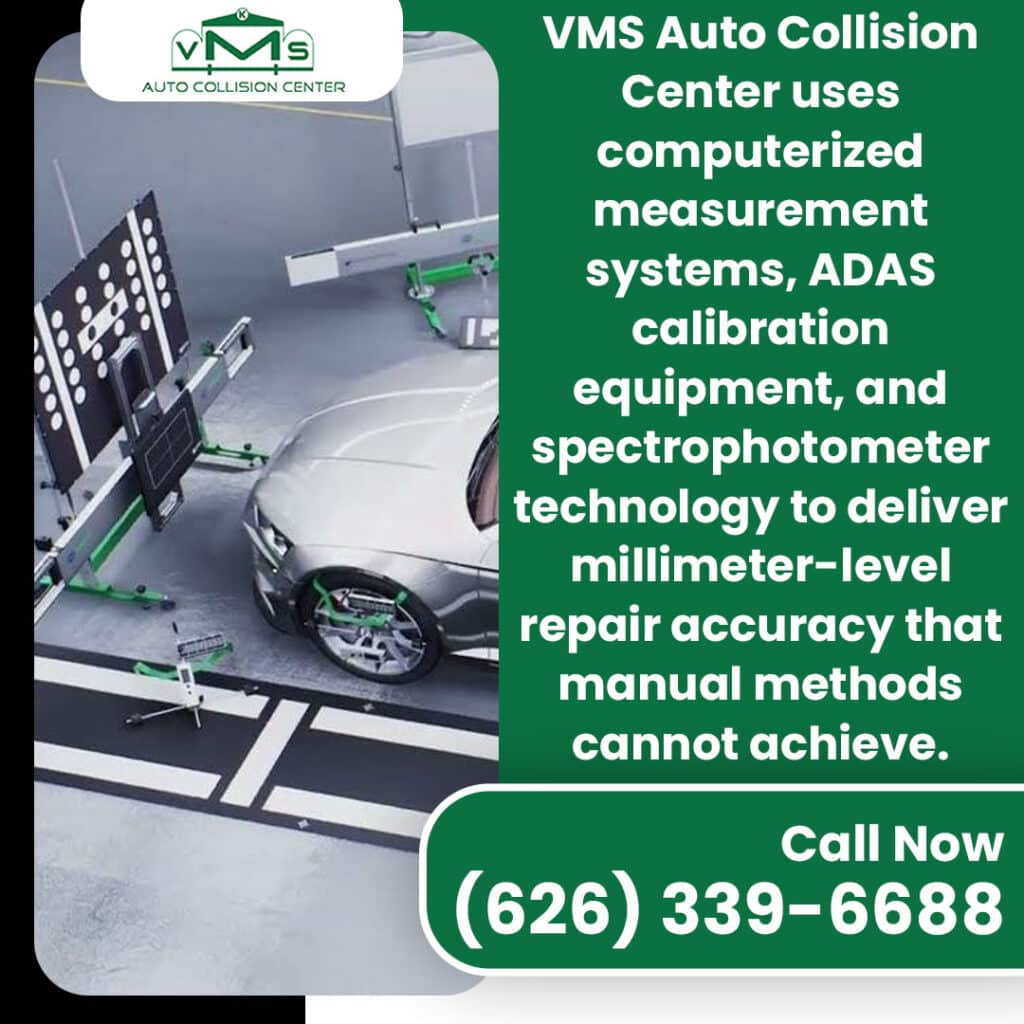
The biggest improvement in collision repair came from computerized measuring systems. These tools scan your entire vehicle frame and compare it to factory specifications stored in a database, showing exactly where damage exists and verifying repairs are correct.
Old methods used adjustable gauges hung from specific points on the vehicle. Technicians had to know where to check and interpret measurements manually. This process only checked the areas technicians chose to measure, leaving other damaged spots undetected. Results depended entirely on how experienced and skilled each technician was.
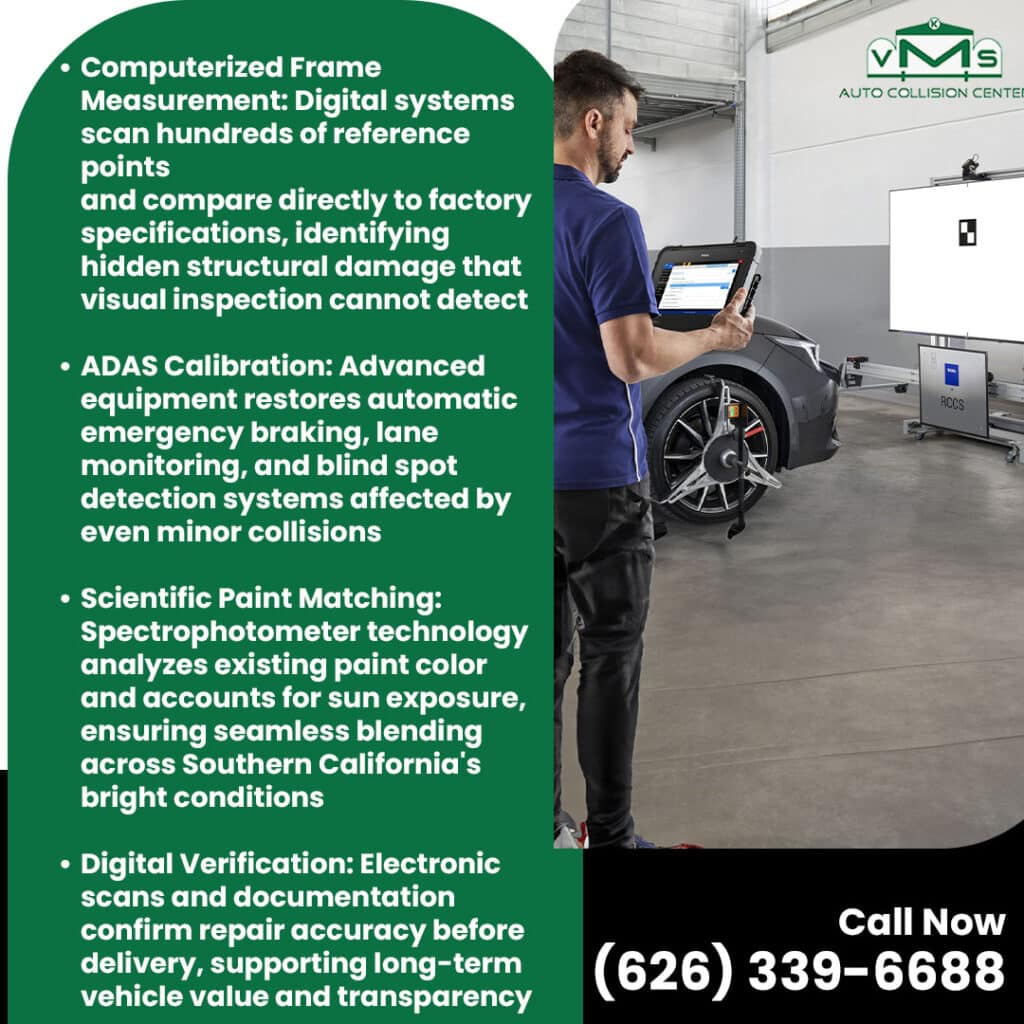
Modern systems check hundreds of points automatically. The computer identifies every deviation from factory specifications, no matter how small. Technicians receive real-time feedback during repairs, stopping exactly when the frame reaches perfect alignment.
Catching Hidden Problems Early
The real value comes from detecting damage you cannot see. A vehicle might look fine on the outside but have a twisted frame underneath. Suspension mounting points might be shifted just enough to cause handling problems later.
Computerized measuring catches these issues during the initial inspection, before repairs begin. This prevents the frustrating situation where you pick up your repaired vehicle only to discover new problems appear while driving. It also prevents shops from giving you a low estimate only to find more damage later.
The system creates a detailed report showing measurements before and after repairs. You get documentation proving your vehicle was restored correctly, which protects resale value.
ADAS Calibration Restores Safety Features
ADAS stands for Advanced Driver Assistance Systems. This includes features such as automatic braking, lane keeping assistance, blind spot warnings, and adaptive cruise control. Most newer vehicles have at least some of these features.
Even small repairs can knock these systems out of alignment. Replacing a windshield moves the camera behind it. Bumper repairs shift the radar sensors. Your warning lights might turn off, but the systems may not work correctly when you need them.
Why Recalibration Is Not Optional
Older vehicles did not have these electronic systems, so shops never needed special calibration equipment. Today, skipping this step leaves your safety features unable to protect you properly.
Professional calibration uses specialized targets and diagnostic equipment to reset sensors to exact factory positions. The process verifies that the automatic braking activates at the right distance, lane warnings trigger correctly, and blind spot monitors detect approaching vehicles.
Paint Matching Technology Eliminates Visible Repairs
The Challenge of Perfect Color Match
Nothing ruins a repair job faster than paint that doesn’t match. Your car might be structurally perfect, but if the repaired panel looks different, the damage remains visible. This problem gets worse as your vehicle ages, and the original paint fades.
Traditional color matching relied on paint codes and visual comparison. A technician would look up your factory paint code, mix a batch, and compare it to your car under shop lights. This rarely worked perfectly because your five-year-old paint has faded differently from a fresh mix of the original color.
How Spectrophotometers Read Your Actual Color
Modern auto body shops use spectrophotometers – precision instruments that scientifically measure reflected light and color data. This technology provides detailed color information beyond what the human eye can reliably match, helping technicians develop a precise paint formula that accounts for environmental effects and paint aging.
The device takes multiple readings from different areas of your vehicle, feeding this data into software that creates the perfect formula. This eliminates the trial-and-error guessing that wastes time and materials with old methods.
The difference shows in the final result. Repairs blend seamlessly with your existing paint, even on metallic and pearl finishes that change color at different angles. You cannot tell where the repair was done, even in bright sunlight.
At VMS Auto Collision Center, we use computerized color-matching technology to deliver seamless paint finishes that protect your vehicle’s appearance and value.
Frame Straightening With Real-Time Monitoring
Controlled Correction Instead of Pulling and Checking
Frame damage occurs when collision forces bend or twist your vehicle’s underlying structure. This must be corrected precisely, or your car will never drive right again. Older repair methods used chains to pull the frame while technicians repeatedly stopped to measure progress manually.
Modern hydraulic frame machines work together with computerized measuring systems. The computer shows exactly how much correction is needed and monitors changes in real time as the frame is straightened. Technicians see measurements updating on the screen and stop precisely when factory specifications are reached.
Why This Prevents Common Problems
The old pull-and-check method often resulted in over-correction or under-correction. Pull too far, and you create new problems. Stop too soon, and the vehicle leaves with frame damage still present. Either mistake meant the customer came back with complaints.
Real-time monitoring eliminates guesswork. The system shows progress continuously, preventing mistakes before they happen. Different pulling angles and forces can be tested instantly to find the most effective approach for each specific damage pattern.
This accuracy matters because frame alignment affects everything from tire wear to door fit. Suspension parts wear out prematurely when mounting points are misaligned. Doors create wind noise when openings are not square. The steering pulls to one side when the frame is not straight.
Digital Verification Before You Drive Away
Multiple Inspection Points Catch Problems
Quality control used to mean having someone walk around your vehicle, checking panel gaps and paint appearance. Modern verification goes much deeper with digital tools that measure and test what eyes cannot see.
Paint thickness gauges scan repaired areas to detect too much body filler or uneven coating. Diagnostic scanners verify that all your vehicle’s computer systems are working correctly. Frame measurements are repeated to confirm that the repairs stayed accurate through the entire process.
Documentation Protects Your Investment
Digital verification creates detailed records proving your repairs were done correctly. You receive reports showing frame measurements, system calibration results, and quality inspection data.
This documentation matters when you sell or trade your vehicle. Buyers and dealers heavily discount cars with accident history unless you can prove professional repairs. Complete repair records demonstrate that your vehicle was restored to factory condition, protecting resale value.
The verification process also catches problems before you leave the auto body shop. Many issues that would cause you to return days or weeks later get found and corrected during the final inspection. This saves you time and frustration while confirming you received quality work.
What This Means for Covina Drivers
Technology Delivers Better Results
Choosing an auto body shop in Covina with modern equipment makes a measurable difference in repair quality. Advanced tools complete repairs faster, with greater accuracy, and provide proof that work was done correctly.
Technology-equipped auto body repair services identify all damage during initial inspection, preventing surprise costs when hidden problems appear later. Digital systems guide repairs to exact specifications without trial-and-error adjustments. Automated verification catches defects before vehicle delivery rather than after you drive away.
Southern California’s intense sun creates specific challenges for paint matching. Colors fade differently based on sun exposure and parking habits. Without spectrophotometer analysis, matched paint often looks close in the shop but is wrong in bright daylight.
Heavy traffic in the Covina area increases collision frequency and makes reliable repairs more important. You need your vehicle back quickly, with confidence that it was fixed right. Shops using outdated methods take longer and produce inconsistent results.
Investment in Equipment Shows Commitment to Quality
Modern diagnostic and repair equipment represents a substantial financial commitment. Budget operations avoid these expenses, using older tools and manual methods that reduce their costs but compromise your repair quality. Facilities that invest in current technology prioritize accurate repairs over quick profits. The equipment enables technicians to work to exact factory specifications rather than “close enough” standards.
VMS Auto Collision Center: Technology-Driven Auto Body Repairs in Covina
VMS Auto Collision Center has served Covina and the surrounding areas since 1989. For over 35 years, our family-owned auto body shop has maintained continuous investment in advancing repair technology as vehicles become more complex.
Three Generations of Excellence
Our commitment to quality spans three generations. What started as a small collision repair facility has grown into a fully equipped modern auto body shop without losing the personal service and attention to detail that built our reputation. We have earned an I-CAR Gold Class recognition – an industry-recognized credential that reflects continuous training and knowledge in modern collision repair techniques. This designation shows our commitment to up-to-date procedures but does not guarantee specific repair outcomes.
I-CAR Gold Class certification represents the highest standard in collision repair training. This recognition requires ongoing education across all repair roles, from estimators to refinish technicians. Our team continuously updates their skills to handle the latest vehicle technologies, including advanced materials, electronic systems, and manufacturer-specific repair procedures.
Our Technology Advantage
At VMS Auto Collision Center, we use computerized measuring systems to verify frame alignment matches factory specifications within millimeters. Spectrophotometer paint matching technology analyzes your vehicle’s exact color, accounting for fade and environmental effects that manual methods miss.
This combination of advanced equipment and trained technicians delivers repairs that meet or exceed manufacturer standards. You receive documentation proving your vehicle was restored correctly, protecting both safety and resale value.
Standing Behind Our Work
Our Limited Lifetime Warranty backs every repair we complete for as long as you own your vehicle. This warranty demonstrates our confidence in both our workmanship and the technology we use. Unlike other facilities offering limited 30-day or one-year warranties, our auto body shop in Covina stands behind repairs indefinitely because we know they were done right the first time.
The warranty covers all aspects of collision repair work, including structural repairs, paint, and parts installation. If any defect in our workmanship appears, we correct it at no additional charge. This protection gives you peace of mind knowing your investment is protected.
Experience the Difference Modern Technology Makes
Vehicle complexity continues increasing with each model year. Shops relying on outdated manual methods cannot deliver the precision required for proper repairs. Modern equipment is now necessary, not optional, for restoring vehicles correctly.
VMS Auto Collision Center combines advanced technology with experienced technicians who understand how to use these tools properly. Our systematic six-step repair process includes digital measurement, calibration verification, and quality control at multiple stages. As a full-service auto body shop in Covina, we coordinate directly with insurance companies to handle claims paperwork and rental car arrangements. Our transparent communication keeps you informed throughout repairs rather than leaving you wondering about progress.
Call VMS Auto Collision Center today at (626) 339-6688 or email info@vmsautocollision.com to schedule your free damage assessment. Discover why Covina drivers choose our auto body repair service for technology-enhanced repairs that deliver measurable accuracy.