
Collision damage affects more than just how your car looks. Vehicles with accident history sell for less than similar cars with clean records. This happens even when repairs are done correctly, and the car looks perfect. Quality repairs help protect your car’s value. Professional work using the right parts and proper methods keeps your vehicle worth more when you sell or trade it in. The difference between good repairs and cheap repairs can mean thousands of dollars later.
VMS Auto Collision Center has helped Covina drivers protect their car values since 1989. Our certified auto body repair technicians follow proper repair steps and create detailed records that make future buyers feel confident. This careful approach protects your investment for years to come.
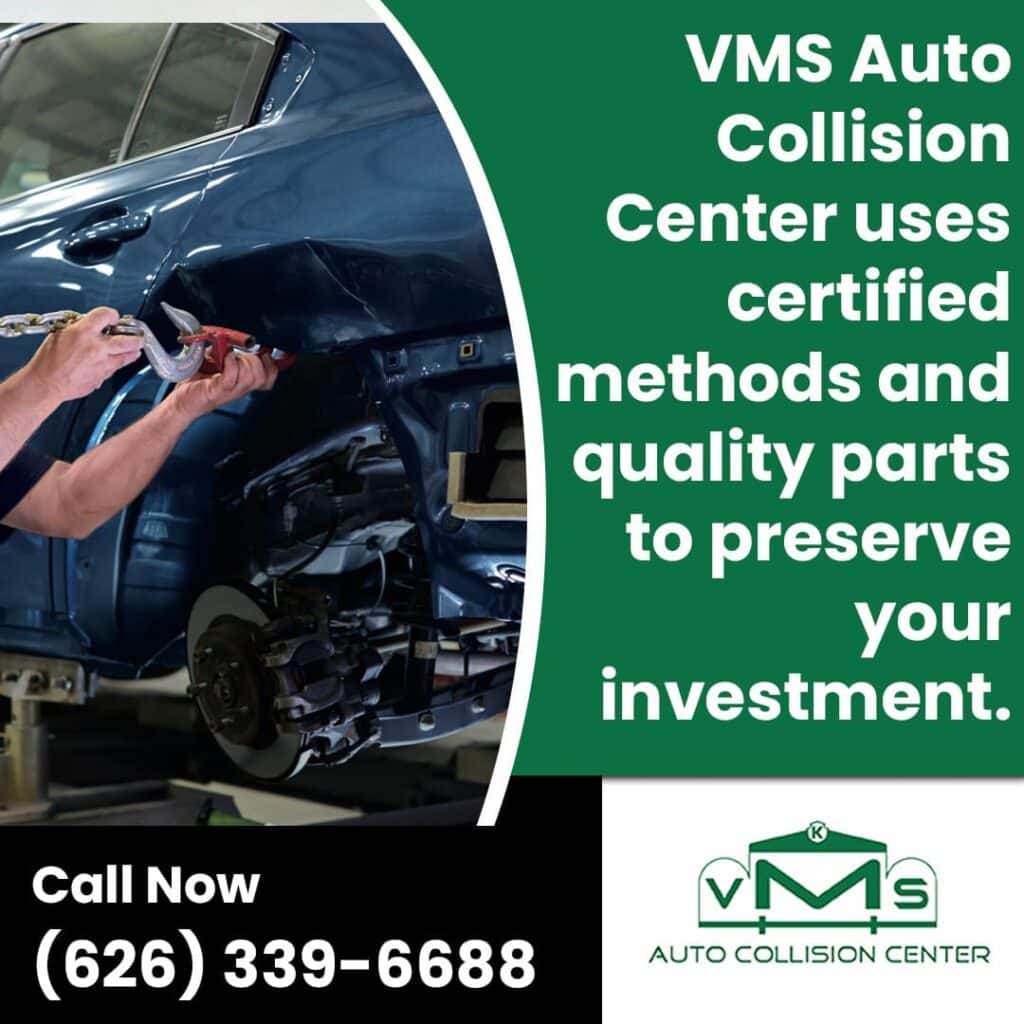
Accident Records and Their Lasting Impact
Accidents get recorded in vehicle history reports. These records affect what buyers will pay and whether they’ll even consider your car.
How History Reports Work
Carfax and AutoCheck gather information from insurance companies, auto body shops, and state motor vehicle departments. Reported accidents and insurance claims often create permanent records tied to your car’s vehicle identification number. These reports show when accidents happened, damage severity, and claim information.
When someone wants to buy your car, they’ll check the history first. Cars with clean records sell for more money. Cars with accident records often sell for less, even when the repairs were done perfectly. According to CARFAX data analysis, vehicles with accident history sell for an average of $500 less at retail for minor damage and up to $2,300 less wholesale for severe damage. Multiple accidents make things worse. If your car shows three different collision claims, buyers worry about ongoing problems. Each accident report makes buyers more concerned.
Different Types of Damage
History reports show how serious each accident was. Minor accidents involving just one panel and no frame damage worry buyers less. These usually cause smaller drops in value. Medium accidents that bent the frame or damaged several panels reduce the value more. Buyers wonder if the repairs were done right, even when everything looks good.
Major accidents with serious frame damage or deployed airbags hurt the value the most. Some buyers won’t even look at cars with severe accident history, no matter how well they were fixed.
Why Hiding Damage Backfires
Sellers must disclose known accident damage when selling used vehicles. Failing to do so constitutes fraud in most states. Professional inspectors can find repair evidence by measuring paint thickness, checking panel gaps, and examining the frame.
When buyers discover hidden damage, trust disappears completely. They either walk away or demand much lower prices than typical accident discounts. Hiding problems makes buyers think you’re covering up even worse issues.
How Repair Quality Protects Your Investment
Two cars with identical accident histories can be worth very different amounts based on repair quality. Professional auto body shops using certified methods protect value better than budget operations.
Parts Make a Big Difference
Original Equipment Manufacturer (OEM) parts come from the same suppliers that built your car originally. These parts fit exactly right and work with all your car’s systems perfectly.
Aftermarket parts are made by other companies and come in three quality levels. Some meet industry standards through testing. Others provide basic functions without much checking. The cheapest options have minimal quality control and often don’t fit properly.
Modern cars have cameras and sensors built into bumpers and panels. These safety systems need parts that position everything exactly where it should be. Wrong parts can make your automatic braking or parking sensors stop working.
For example, a replacement bumper must hold the radar sensor in exactly the right spot for collision warning to work. Backup cameras also need precise angles to show you what’s behind the car correctly.
Frame Repairs Need Special Equipment
Frame damage requires computerized measuring tools to fix correctly. These systems check that everything lines up with factory specifications. Doing this by eye doesn’t work because modern frames need precision within millimeters.
Proper training matters just as much as proper equipment. Technicians with professional certification receive ongoing education on repair methods for modern materials like high-strength steel and aluminum. Certified technicians know how to weld different metals correctly and restore original strength.
Budget shops sometimes skip measurements to finish faster. Hidden frame problems cause tires to wear out quickly, steering to pull, and crash protection to fail. Buyers find these issues during inspections, which hurts your car’s value.
Paint Quality Matters Long-Term
Factory paint is tested to last for years without fading. Original paint stays looking good for a long time under normal conditions. Quality matters because paint is the most visible part of any repair.
Proper paint systems require multiple protective layers. Professional facilities apply primer for adhesion, base coat for color, and clear coat for protection and shine. Each layer needs adequate drying time before the next application to prevent defects.
Cheap paint without proper protection fades quickly under the California sun. The clear coat fails and creates a dull, oxidized look. Faded paint shows obvious color differences between repaired and original panels. These mismatches become deal-breakers when buyers inspect your car.
At VMS Auto Collision Center, we use OEM parts, computerized measuring systems, and quality Axalta paint to protect your vehicle’s value. Our I-CAR Gold Class certified technicians follow manufacturer specifications for every auto body repair service, keeping your car worth more when you’re ready to sell or trade.
The Value of Proper Repair Records
Complete repair records show buyers that your car was fixed correctly. Missing paperwork makes buyers suspicious about damage or poor workmanship.
What Good Records Include
Professional shops provide complete documentation that protects your investment:
- Written estimates listing all work done, including which labor was performed, what parts were replaced, and which materials were used. This openness lets buyers verify what was fixed.
- Parts receipts proving that original manufacturer components were installed. Invoices show part numbers, supplier names, and purchase dates. Vague descriptions suggest cheaper aftermarket parts were used instead.
- Before and after photos documenting the original damage. Multiple angles showing structure, mechanical parts, and body damage provide visual proof. Final photos verify proper restoration.
- Warranty certificates covering the work give future owners peace of mind. Lifetime warranties especially help resale value by reducing buyer concerns.
Why Certifications Matter
Professional certifications prove technicians received proper training. These credentials require ongoing education about current repair methods for new vehicle technologies. Manufacturer programs show shops can handle specific brands correctly. These programs check for proper equipment, verified training, and quality standards.
VMS Auto Collision Center maintains these certifications, including I-CAR Gold Class and Mazda Collision Network membership. Our paperwork includes training credentials, shop certifications, and manufacturer program membership.
Deciding About Insurance Claims
Insurance claims appear in the vehicle history permanently. Small claims sometimes reduce the value more than the repair itself because buyers can’t verify quality. Damage that costs less than your deductible should be fixed without insurance when possible. These repairs avoid permanent records while keeping your car looking good.
Major damage justifies filing claims despite the history impact. Insurance provides needed funds while documentation proves professional work was done.
Lease Returns Need Special Attention
Lease agreements specify acceptable wear when you return the vehicle. Going over these limits creates surprise charges.
Understanding Lease Rules
Most leases allow minor wear, including small scratches, minor dents, and paint chips. Damage beyond these limits triggers charges upon return. Leasing companies conduct turn-in inspections to assess wear beyond normal limits, and they typically apply higher internal labor/parts rates for reconditioning to ensure vehicles meet resale standards.
Smart Pre-Return Strategy
Professional auto body repair before returning your lease prevents excessive charges. Fixing specific problems that trigger penalties costs less than leasing company bills.
Auto body shops identify which damage causes lease penalties during pre-return inspections. This focuses your investment on value-protecting work rather than unnecessary perfection. A damaged panel may need replacement because it exceeds size limits, while minor repairs bring damage below thresholds and avoid replacement charges altogether.
Local Conditions Affect Repair Needs
Southern California weather and traffic create specific repair considerations. Understanding these factors improves results.
Weather Impact
California gets intense sun that fades paint faster than in many other places. Strong sunlight breaks down protective coatings and causes clear coat failure. Paint without proper protection fades rapidly under the Covina sun. Color matching must account for how existing panels have faded based on which side of the car they’re on and where you park.
Daily temperature changes between hot days and cool nights stress body panels. Expanding and contracting affect how panels stay attached. Using proper materials and methods accounts for these temperature swings.
Traffic Patterns
Heavy commuter traffic on Interstate 10 and State Route 60 causes frequent rear-end collisions. Stop-and-go conditions lead to bumper and trunk damage. These low-speed impacts need careful attention to bumper supports. Damage can weaken crash protection without visible signs on the outside.
Parking lot incidents at shopping centers create door dings and fender scrapes. These minor damages let moisture in, which starts rust. Quick repairs prevent corrosion from spreading.
Modern Equipment Makes Better Repairs
Today’s auto body repair requires advanced tools for proper work. Good equipment separates professional shops from budget operations.
Measuring Systems
Laser measuring equipment is required to check frame alignment against manufacturer specifications. It finds problems that you can’t see with your eyes. Older measuring methods aren’t accurate enough. This allows frame misalignment that buyers find during inspections before purchase. Frame rails must line up precisely at multiple points. Suspension mounts need similar accuracy for wheels to align correctly.
At VMS Auto Collision Center, we take measurements at multiple points during repairs. We begin by documenting the damage. During work, we verify correction progress. Before delivery, we validate that everything is right.
Paint Matching Equipment
Computer systems analyze paint colors that human eyes can’t distinguish. These devices measure how light reflects at different angles, which matters for metallic paints. Software compares measurements to manufacturer formulas adjusted for aging. The system creates mixing instructions for perfect matches that buyers can’t tell from the original panels.
Trying to match colors by eye often produces noticeable differences. These mismatches show up clearly in outdoor lighting. Our auto body shop in Covina uses the Axalta paint system with computer mixing to deliver matches identical to original panels. This invisible blending protects resale value.
Safety System Calibration
Modern cars have multiple cameras, radar sensors, and parking detectors. These systems need a precise setup after repairs that move their mounting locations. Calibration uses special targets positioned at exact distances and heights. It also involves test drives with diagnostic computers monitoring. Both require manufacturer-specific equipment.
Shops without calibration equipment return cars with broken safety systems. Buyers discover these problems during test drives or inspections. Non-working safety features reduce value beyond accident history.
Value Protection Process at VMS Auto Collision Center
Our systematic approach addresses everything that affects your car’s worth. Each step helps minimize value loss from collision damage.
Thorough Initial Inspection
Our assessment process catches problems before they become surprises:
- Computer measurement identifies frame damage during the first inspection. Finding problems early prevents surprises mid-repair.
- Electronic scanning reveals sensor problems and calibration issues through diagnostic computers that show which systems need attention.
- Detailed records at drop-off create baseline documentation with photos from multiple angles, damage measurements, and system status that establish repair scope.
- Complete assessment produces accurate estimates before work starts, helping you avoid surprise expenses from hidden damage.
Proper Repair Steps
We follow professional standards and manufacturer guidelines:
- Frame work uses correct techniques for modern steel and aluminum materials with gradual straightening and measurement checks after each adjustment to prevent creating new damage.
- Panel installation maintains factory gap specifications by measuring door, hood, and fender gaps at multiple points for consistent spacing.
- Paint preparation includes proper surface treatment for adhesion with multiple layers of primer, color, and clear coat. Each layer gets adequate drying time before the next.
Final Quality Checks
Complete inspection happens before you pick up your car:
- Frame measurements confirm proper structural restoration, while paint thickness testing validates correct coating application.
- Electronic system testing verifies that all systems work correctly.
- Test drives identify any operation issues needing correction by checking door operation, noise levels, and driving feel.
- Complete documentation includes all repair records, parts receipts, warranty certificates, and photos that transfer to you for future reference.
Our auto body shop in Covina follows this thorough process to maintain your vehicle’s resale value and give you confidence in every repair.
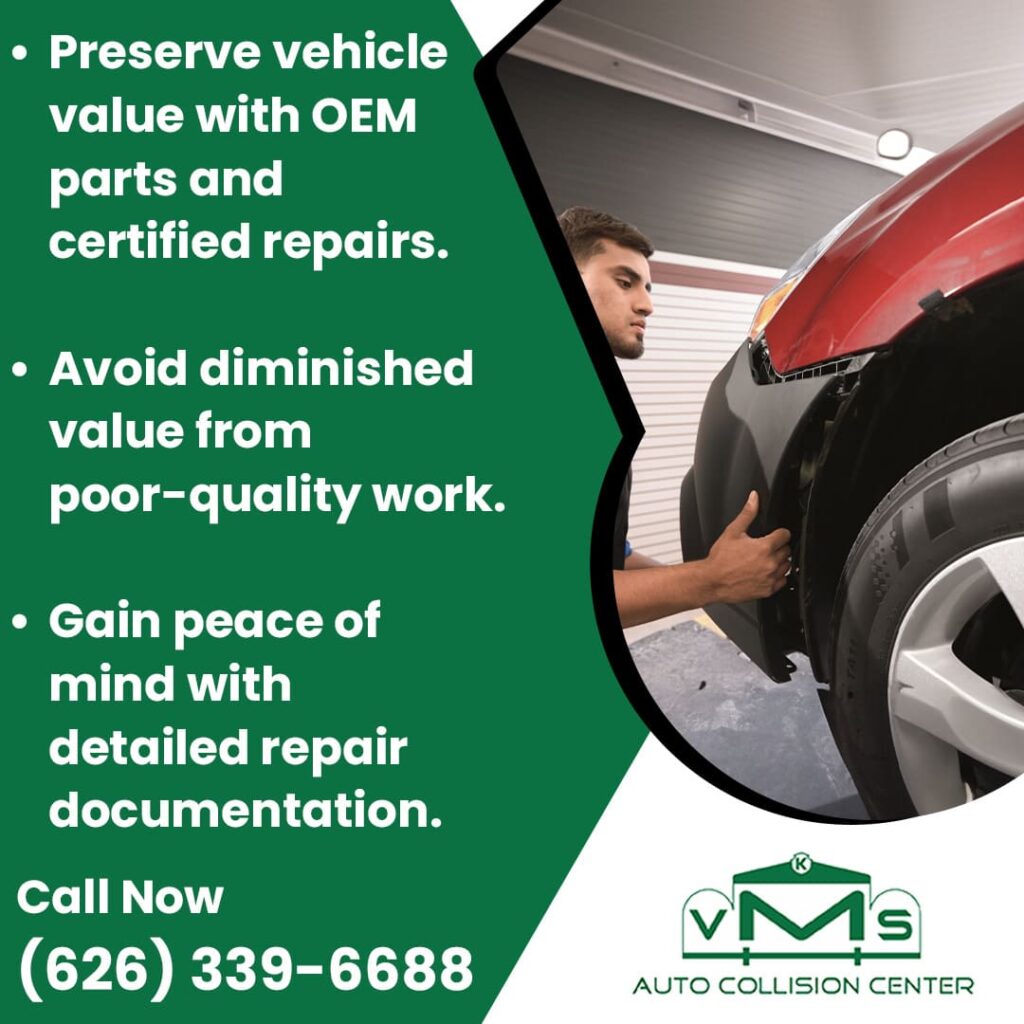
Why Professional Repairs Pay Off
Quality auto body repair service costs more initially than budget alternatives. However, value protection often exceeds this price difference when you sell.
Long-Term Results
Professional repairs using proper methods last your car’s lifetime without additional work. Quality paint resists fading for many years, like the original panels.
Budget repairs often need correction within a few years. Paint fades, panels misalign, or rust forms. These repeat repairs cost more than the initial savings. Cheap paint that fades after a few years requires complete refinishing. Panel gaps that widen from improper installation need correction. These problems add up financially over time.
Documentation Advantage
Complete records from certified shops justify higher prices when selling. Buyers pay more for cars with professional documentation versus those without records. This price difference reflects how documentation reduces buyer concerns about hidden problems.
Get Auto Body Repair Service That Protects Your Car’s Value
Professional auto body repair protects your investment through certified restoration, quality components, and complete documentation. The difference between good and budget repairs often means substantial retained value.
VMS Auto Collision Center is a family-owned operation that has served the San Gabriel Valley since 1989. We have helped local drivers maintain maximum vehicle value through proper collision repair for over three decades. Our I-CAR Gold Class certification, Mazda Collision Network membership, and BBB A+ accreditation demonstrate our commitment to quality standards. Our Limited Lifetime Warranty covers workmanship for as long as you own your vehicle.
Contact VMS Auto Collision Center, your trusted auto body shop in Covina, at (626) 339-6688 or email info@vmsautocollision.com for a detailed damage assessment. We provide written estimates, insurance coordination assistance, and clear communication throughout repairs. Protect your vehicle’s value with professional restoration that buyers recognize and reward.