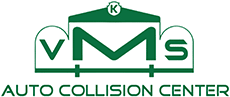
Most drivers returning a leased vehicle focus on mileage. They track the numbers, plan their driving, and stay within the allowance. What catches many off guard is the exterior inspection and the bill that follows when dents, scratches, or paint damage exceed the leasing company’s wear standards. Unlike mileage overages, which are spelled out plainly in the contract, exterior damage charges depend entirely on what a third-party inspector documents and how the leasing company prices each item. Drivers who arrange auto body repair before that inspection happens retain full control over the quality of the work and where it gets done. Those who wait surrender that control to the leasing company and its vendors.
At VMS Auto Collision Center, we work with lease return drivers regularly. Rooted in the Covina community since 1989, our team understands what inspectors look for, which damage warrants professional auto body repair services, and which minor wear typically falls within tolerances most leasing programs accept. With I-CAR Gold Class certification, a BBB A+ rating, and over three decades of experience, our body shop in Covina helps drivers prepare their vehicles for turn-in with a clear repair plan and documented estimates. The sections below cover each dent repair option available to lease return drivers, what each method addresses, and how to approach the process before your return date.
How Lease Return Inspections Actually Work
Most leasing companies send a third-party inspector to document the vehicle’s condition. Around 45 to 60 days before the end of your lease, a representative from the leasing company’s inspection partner will contact you to schedule a vehicle inspection.
The inspector produces a condition report that itemizes every item exceeding acceptable wear tolerances. That report becomes the basis for your final bill. Once the vehicle is turned in, the charges listed on that report are what you owe at the leasing company’s rates, through their vendors.
Drivers who address exterior damage before the inspection, through an independent body shop, take control of the repair quality and the cost. Those who wait hand that control to the leasing company.
What Triggers an Excess Wear Charge
Leasing companies define acceptable wear in specific terms. Common thresholds include:
- Dents larger than the size of a standard credit card or a 25-cent coin, depending on the brand
- Scratches that have broken through the clear coat or base coat to the primer or metal beneath
- Paint damage, visible overspray, or color mismatch from prior repair attempts
- Body damage that changes the surface contour of a panel in a way that requires professional correction
Minor dings that fall below the size threshold and have no paint damage typically pass inspection. The problem is that most drivers do not know exactly where their leasing company’s threshold sits until they receive the inspection report.
Getting a professional assessment before the inspection removes that uncertainty.
Repair Option 1: Paintless Dent Repair
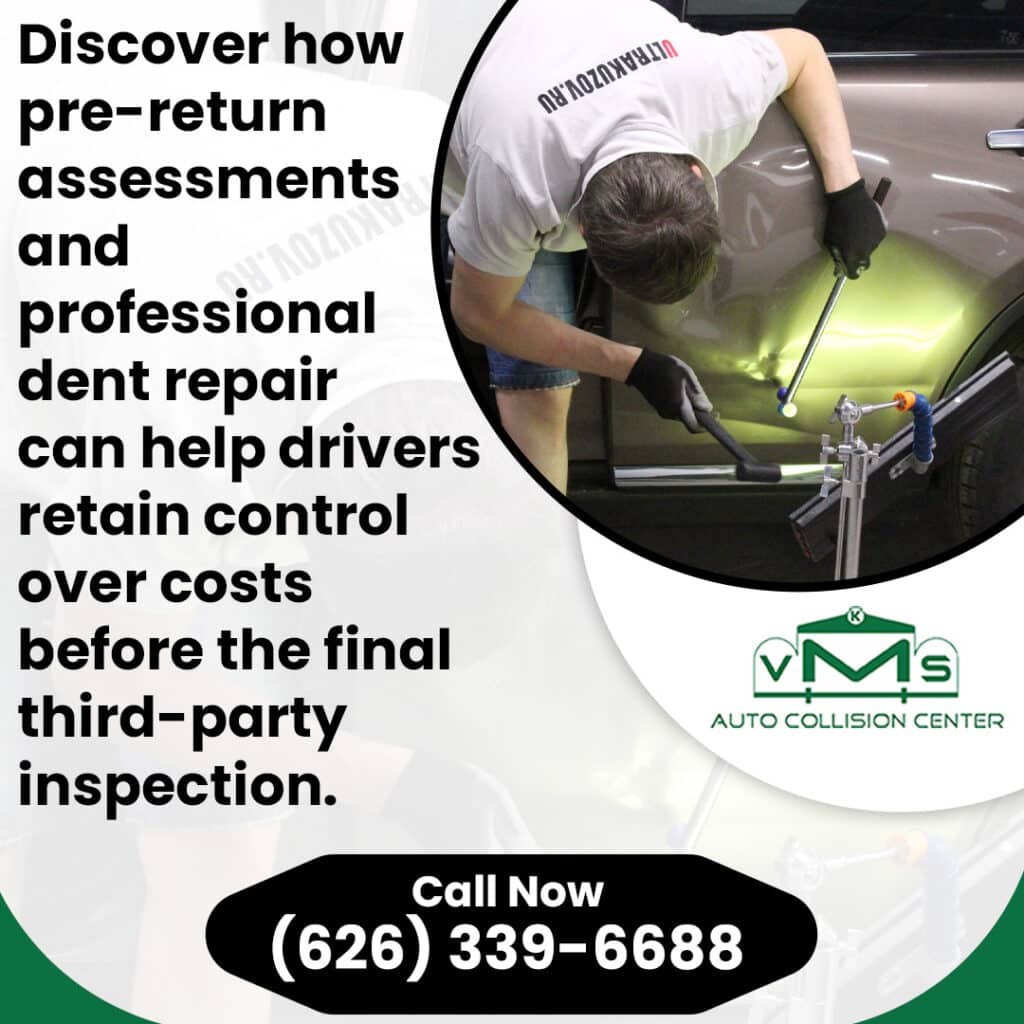
Paintless Dent Repair, commonly referred to as PDR, is a technique where trained technicians reshape vehicle panels from behind using specialized rods and picks. No paint, filler, primer, or sanding is involved. The original factory finish remains completely intact throughout the process. According to AAA, an estimated 80% to 90% of minor dents and dings may be fixed using PDR.
What PDR Addresses on a Lease Return Vehicle
PDR is appropriate when three conditions are present together:
- Intact paint. The factory clear coat, base coat, and primer layers must all be undamaged. PDR reshapes the metal beneath an unbroken paint system. If any layer has cracked, chipped, or been scratched through, paint work is required regardless of dent size or depth.
- Accessible panel backside. Technicians position tools from behind the damaged panel to apply controlled, graduated pressure. Access is gained through door frames, window openings, existing vehicle openings, or careful interior panel removal. Areas where no backside tool position exists eliminate PDR as an option.
- Shallow, round deformation. Door dings from adjacent vehicle contact in parking lots, round impacts from shopping cart strikes on door panels and quarter panels, and shallow hail impacts across horizontal surfaces like the hood, roof, and trunk lid are all well-suited to PDR. These dent types compress metal without folding it along a defined line.
What PDR Cannot Address
PDR does not apply to creased dents or damage with a sharp, linear fold in the metal. It does not apply when paint has been compromised. It cannot correct metal that has stretched beyond its shape memory from a deep or high-energy impact. When any of those conditions are present, traditional auto body repair is the appropriate path.
A qualified technician evaluates each damaged area individually before recommending PDR. Choosing a certified Covina auto body shop ensures the method and the result are based on an accurate assessment of the damage, not an assumption based on dent size alone. At VMS Auto Collision Center, we assess each damaged area against PDR eligibility criteria and provide a clear recommendation before any repair begins.
Repair Option 2: Traditional Auto Body Repair
Traditional auto body repair addresses damage that falls outside PDR’s range. The process involves metal reshaping using specialized hammers, dollies, and picks; body filler application in thin, staged layers to smooth surface irregularities; progressive surface preparation through multiple sanding stages; and a complete paint system application using computerized color-matching technology. This is the appropriate method when the exterior damage involves paint compromise, creased metal, or panel areas without backside access.
Paint Matching After a Full Lease Term of Weathering
This is where traditional auto body repair becomes particularly relevant for lease returns, and where amateur repair attempts consistently fail.
Vehicle paint does not stay static over a 24 to 36-month lease term. Sun exposure fades pigment. Oxidation affects the clear coat’s gloss. The factory paint code assigned to a vehicle at manufacture reflects the original formulation, not the condition of the panel after years of California sun exposure.
Professional auto body repair services use spectrophotometer technology to measure the current color of the vehicle’s finish. A spectrophotometer is an instrument that identifies exact color values by measuring the wavelengths of light reflected off a painted surface. That measurement accounts for how the paint has aged, not just what it was when the vehicle left the factory.
The refinished panel is then blended into adjacent panels during application. This technique, called blending, feathers the new paint into the surrounding finish so that no visible line exists between the repaired area and the original surface. The result holds up to the kind of close, deliberate review that a lease inspector applies.
At VMS Auto Collision Center, we color-match every panel requiring refinishing using a computerized paint mixing system with Axalta paint products. We apply the same process to lease return vehicles as we do to collision repairs, with the same attention to paint condition, blending, and finish quality.
Repair Option 3: Lease Return Reconditioning
Lease return reconditioning is a structured pre-turn-in evaluation and repair service specifically designed for drivers approaching their lease end date. It differs from a standard damage estimate in scope and purpose.
A standard estimate addresses the damage you bring in for repair. Lease return reconditioning evaluates the vehicle’s entire exterior against the standards a leasing company inspector applies. It identifies what will be flagged, what repair method applies to each area, and which items fall within the tolerances most programs accept without charge.
The output is a documented, prioritized repair plan. Drivers will know what needs attention, what method addresses each item, and what the work involves before any repair begins.
VMS Auto Collision Center offers lease return reconditioning for drivers throughout Covina and the San Gabriel Valley. Our team is familiar with the exterior condition standards that third-party inspectors apply across major leasing programs. Our Covina auto body shop helps drivers distinguish between damage that warrants professional repair and minor wear that typically falls within acceptable tolerances.
Two Repair Approaches to Avoid Before Lease Turn-In
Consumer Touch-Up Paint
Consumer touch-up paint products are keyed to a factory paint code. The problem for lease return vehicles is that a factory code reflects the original formulation, not the current state of the panel after years of sun exposure and oxidation.
A fresh touch-up applied at the factory code appears brighter or lighter than the weathered finish surrounding it. On standard solid colors, the patch stands out clearly against the faded panel. On metallic finishes, the contrast is more pronounced. Factory metallic paint achieves its appearance through controlled spray application that orients metallic flake uniformly across the surface, while a rattle-can product distributes flake at random angles, producing a dull, flat result.
On pearl and tri-coat finishes, consumer products cannot replicate the layered application process that creates the effect. The patch is visible, and inspectors identify consumer touch-up work as a routine part of their review.
A visible patch results in an excess wear charge even when the original damage beneath it was minor.
DIY Dent Kits
Consumer dent kits are designed for one specific scenario: a small, shallow, round dent with completely intact paint and clear backside panel access. Most lease return vehicles have at least some damage that falls outside those conditions.
Consumer kits applied to damage that they were not built for produce predictable outcomes:
- Applying too much suction from a pull tab lifts the surrounding metal, creating a raised outline around the original dent that is more visible than the dent itself.
- Pushing from behind the panel at an incorrect angle or position deepens the dent rather than correcting it.
- Repeatedly flexing the panel to find the right pressure point stresses the paint system and cracks the clear coat, converting a dent-only repair into a refinishing job.
Any of those outcomes on a lease return vehicle creates additional damage that requires professional correction before the vehicle can be returned without penalty.
Choosing a Body Shop for Lease Return Repairs
Not every auto body shop approaches lease return vehicles the same way. The repair quality, the paint matching process, and the warranty behind the work all vary by facility. For lease return drivers, those differences directly affect whether a repaired panel holds up to a professional inspector’s review.
When evaluating a body shop for lease return repairs, look for the following:
- Industry Training Certifications. Shops whose technicians hold active, third-party training certifications demonstrate a commitment to current repair standards. Certifications that require ongoing education indicate that technicians stay current with evolving repair procedures, refinishing techniques, and paint application standards. These skills directly affect whether a color-matched repair passes a lease inspector’s close review.
- Verified Business Reputation. An independently verified track record of ethical business practices and responsiveness to customer concerns matters when you are making repair decisions based on a shop’s assessment and advice. Third-party accreditation from recognized consumer organizations provides that verification.
- Manufacturer Network Participation. Some body shops are approved by vehicle manufacturers to perform repairs that meet the automaker’s own standards for procedures, parts, and equipment. Participation in these programs indicates the shop operates at a level the manufacturer considers acceptable for restoring their vehicles.
VMS Auto Collision Center holds I-CAR Gold Class certification, carries a BBB A+ rating, and is an active member of the Mazda Collision Network. Beyond the repair work itself, our team guides drivers through every step of the pre-return process, from the initial damage assessment through to final delivery, so there are no surprises before turn-in.
Wear and Tear Protection Plans
Some lease agreements include excess wear and tear protection, either as a standard feature or as an optional add-on purchased at lease signing. These plans waive qualifying excess wear charges at turn-in, up to defined coverage limits, commonly between $5,000 and $7,500, depending on the program.
Before scheduling repairs, review your lease contract to confirm whether this coverage applies to your agreement. Some programs require documented repair work from a certified facility in order to process a waiver. If your plan includes that condition, the body shop can provide the documentation your leasing company requires to support the claim.
Coverage caps apply to all protection plans. Understanding what falls within the plan’s limits and what does not helps determine which repairs to address independently before turn-in.
Schedule Your Pre-Lease-Return Assessment at VMS Auto Collision Center
Contact VMS Auto Collision Center before your turn-in date to schedule a pre-lease-return damage assessment. Our team provides auto body repair services backed by I-CAR Gold Class certification and a BBB A+ rating. Call us at (626) 339-6688 or email info@vmsautocollision.com to get started. As a trusted Covina auto body shop, we are here to help you navigate the lease return process with confidence.