
Southern California earns its reputation for sunshine, but spring tells a different story. Between March and May, the region faces sudden thunderstorms, heavy rainfall, strong winds, and hail that leave real damage on vehicle exteriors. For drivers in Covina, West Covina, Azusa, San Dimas, Glendora, and the wider San Gabriel Valley, these seasonal storms are not rare exceptions. They are a recurring reality that can leave hoods, roofs, and door panels covered in dents overnight.
At VMS Auto Collision Center, the spring storm season keeps our team busy year after year. As a family-owned body shop in Covina with roots going back to 1989, we have restored hundreds of vehicles after hail events, debris impacts, and storm-related panel damage. Our services range from paintless dent repair for minor hail damage to full auto body repair for more involved cases, all backed by I-CAR Gold Class certification and a BBB A+ rating.
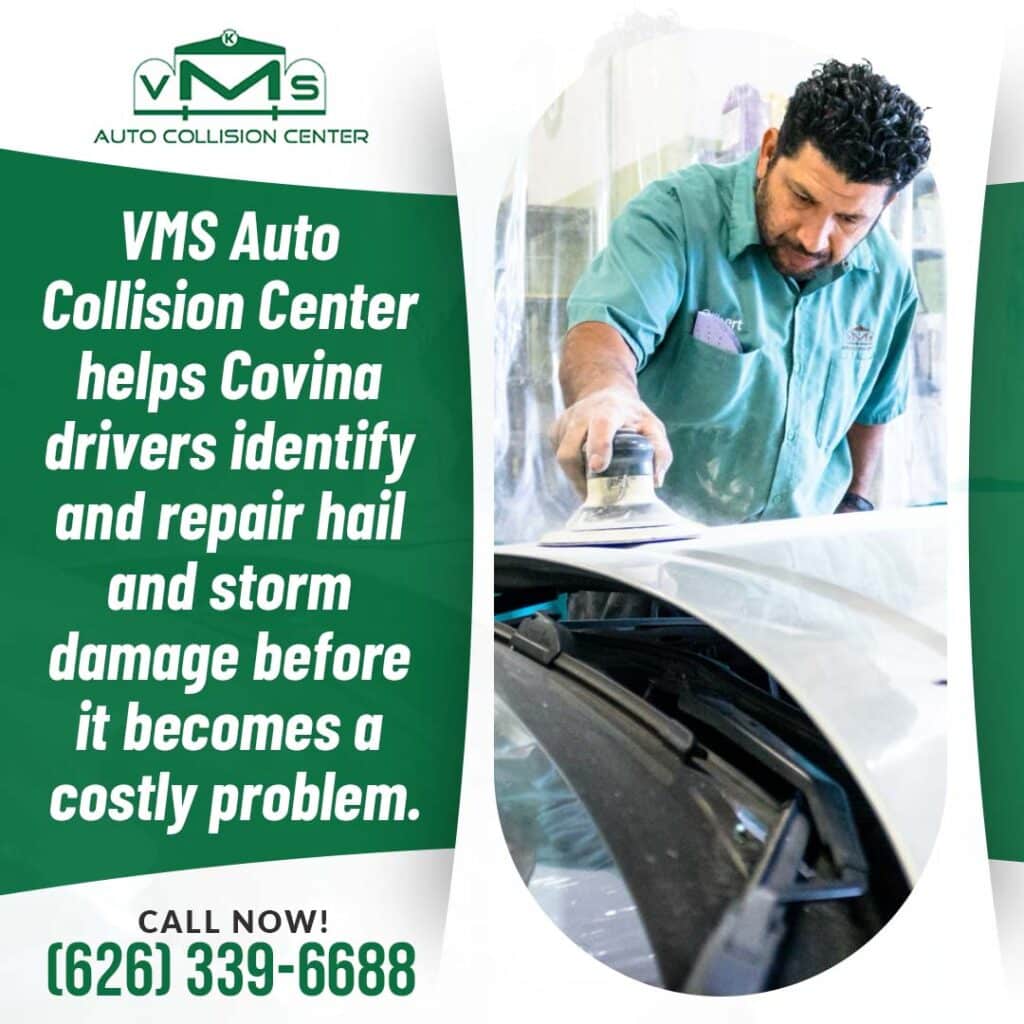
How Spring Storms Damage Vehicle Exteriors
Spring storms cause three primary forms of exterior vehicle damage: hail dents, wind-driven debris impacts, and paint deterioration from moisture exposure. Each type requires a different repair approach and carries its own long-term consequences if left unaddressed.
Hail Dents
Hail dents are round depressions spread across horizontal panels, primarily hoods, roofs, and trunk lids. The size of each hailstone determines the depth and severity of each impact point.
Pea-sized hail creates shallow cosmetic depressions where paint typically stays intact. Quarter-sized hail can crack paint at the point of impact and cause deeper metal deformation. Golf ball-sized hail and larger can fracture windshields, damage mirrors, and deform panels beyond the limits of paintless repair methods.
According to State Farm, the insurer paid out more than $1.2 billion in auto repair claims tied to hail damage in 2024, reflecting how widespread and costly storm damage to vehicles has become.
Wind-Driven Debris Damage
Debris impacts from spring storms produce irregular, sharp-edged dents with paint damage at the point of contact.
Common sources include fallen branches, airborne gravel, and objects displaced by wind gusts. Unlike hail, which spreads damage across large surface areas, debris typically causes isolated impacts on doors, quarter panels (the body sections between the rear doors and the trunk), fenders, and hood edges.
Paint Deterioration from Moisture Exposure
Repeated storm exposure weakens a vehicle’s paint system over time, particularly in areas where prior dents or chips have already broken the protective coating.
Water penetrating a cracked paint surface reaches bare metal underneath. In Southern California’s coastal-influenced air, even inland areas like Covina carry enough ambient moisture to begin surface oxidation. When left unaddressed, minor paint damage progresses to visible rust, expanding the scope of eventual auto body repair services.
Inspecting Your Vehicle After a Spring Storm
A careful post-storm inspection documents the full extent of damage before any insurance contact or repair appointment. Taking a structured approach helps you catch damage that a quick glance might miss.
Checking the Full Exterior
Walk the complete perimeter of your vehicle, not just the roof and hood. Check door panels, quarter panels, the trunk lid, side mirrors, window trim, and front and rear bumper covers. Hail falls at angles during storms, which means vertical surfaces can sustain impacts alongside horizontal ones.
Move your vehicle into direct sunlight or use a flashlight held at a low angle to check for surface irregularities. Angled light casts shadows inside each dent, making depressions visible that flat overhead light conceals. This step is particularly useful for identifying hail damage on darker-colored vehicles where dents are harder to spot.
Testing Paint Condition
Lightly run your hand across dented areas to check whether the paint has cracked. Roughness, a chalky texture, or raised edges around a dent indicate the paint coating has been compromised. This matters because cracked paint determines which repair method applies and whether the damage will worsen with continued weather exposure.
If any area feels rough or shows visible chipping, photograph it separately from panels with intact paint. This distinction affects both the repair estimate and the insurance claim process.
Documenting the Damage
Time-stamped photos from a smartphone provide the clearest and most useful documentation for insurance purposes. Take wide-angle shots showing the overall distribution of dents across each panel, and close-up images of individual impact points where paint cracking is visible.
Note any glass or sensor damage separately. Windshield chips, cracked side glass, and damaged backup cameras or parking sensors are typically processed under a different insurance claim category than body panel dents and require separate documentation.
Once you have documented the damage, a professional inspection at a qualified body shop in Covina will confirm the full scope of repairs needed and identify anything not visible to the untrained eye.
Repair Methods Used at a Body Shop
The right repair method depends on the type of damage, the condition of the paint, and where on the vehicle the damage occurred. Two primary approaches are used in auto body repair: Paintless Dent Repair and traditional bodywork, with hybrid applications for vehicles showing mixed damage.
Paintless Dent Repair
PDR, or Paintless Dent Repair, is a method in which technicians use specialized metal rods and picks to reshape dented panels from behind without disturbing the factory paint.
PDR is the preferred method for hail damage when paint remains intact. It preserves the original factory finish, eliminates the need for body filler or repainting, and completes in less time than traditional bodywork in most cases.
PDR is the appropriate choice when:
- The paint has not cracked or chipped at the impact point
- The dents are round in shape with a depth below one-quarter inch
- The affected panel’s backside is accessible for tool positioning
A single door ding may take one to two hours. Moderate hail damage across a hood and roof typically takes one to three days. Widespread hail coverage across multiple panels may extend the timeline further, depending on the total number of impact points.
Traditional Auto Body Repair
Traditional auto body repair involves metal reshaping, body filler application, primer, and a full paint refinishing process.
Body filler is a two-part polyester compound applied in thin layers over reshaped metal to smooth remaining surface irregularities. Progressive sanding through multiple grit levels prepares the surface for primer and paint.
Paint matching relies on spectrophotometer technology. A spectrophotometer measures the existing paint color at multiple points on your vehicle, accounting for fading or weathering over time. This produces a color formula that blends with surrounding panels rather than appearing as a visible patch.
Traditional auto body repair applies when:
- Paint has cracked, chipped, or separated at impact points
- Metal stretching has pushed the dent beyond PDR depth limits
- The damaged area has limited backside panel access
- Prior repairs or non-factory paint have reduced the paint system’s flexibility
Hybrid Repair for Mixed Damage
When a vehicle sustains hail damage that leaves some dents with intact paint and others with cracked paint, technicians combine PDR and targeted refinishing on the same vehicle.
This approach preserves factory paint across the maximum possible surface area while correcting paint-damaged sections with matched refinishing. It is the more precise option compared to refinishing entire panels that do not require it.
At VMS Auto Collision Center, every vehicle receives an individual damage assessment before any repair path is determined. Technicians evaluate paint thickness, dent depth and shape, panel accessibility, and metal stress before producing a written estimate. If you are unsure about the extent of damage after a storm, our Covina auto body shop is available for a professional assessment before any repair decisions are made.
Navigating the Insurance Claim Process
Filing a hail damage claim follows a defined process. Understanding the sequence in advance reduces confusion and prevents avoidable delays.
Reporting and Coverage
Comprehensive coverage is the policy type that covers weather-related vehicle damage, separate from collision coverage, and it typically applies to hail dents after the deductible is met. Report the damage to your insurance company promptly after documenting it with photos.
Under California law, vehicle owners have the right to select any licensed body shop in Covina or elsewhere for their repairs. You are not required to use an insurer-recommended facility, and you do not need multiple estimates. One professional assessment from a qualified shop is sufficient.
Working with Your Body Shop
A qualified repair facility handles direct communication with your insurer, submits required documentation, and files supplemental claims if additional damage surfaces during the repair process. This coordination reduces the administrative burden on the vehicle owner from the start of repairs through final delivery.
At VMS Auto Collision Center, our team manages the insurance process on your behalf from the moment your vehicle arrives at our shop. We document all damage thoroughly, prepare the required estimate, and submit it directly to your insurer. If additional damage is discovered during repairs, we file supplemental claims and coordinate with the adjuster directly, so you are not left managing back-and-forth communications on your own.
Why Delaying Storm Damage Repairs Creates Larger Problems
Deferred repairs from spring storm damage carry real consequences that grow over time. What starts as a surface issue can become a more involved repair within a single season.
Paint Failure and Rust
Any dent that cracks the paint exposes bare metal to air and moisture. Once rust forms beneath a dent, the scope of required auto body repair services expands well beyond the original storm damage.
Resale Value Loss
Multiple unrepaired hail dents reduce a vehicle’s trade-in value even when the mechanical condition remains sound. Dealership buyers and private buyers inspect vehicle exteriors carefully. Professionally repaired storm damage, backed by documentation and a warranty, is far less damaging to resale value than a hood or roof covered in unaddressed dents.
Insurance Complications
Extended delays between a storm event and filing a repair claim can complicate or narrow coverage. Most policies require timely damage reporting. If secondary damage occurs before repairs are completed and a claim has not been filed, that additional damage may fall outside coverage. Prompt reporting protects the full scope of what your policy covers.
Damage That Requires Immediate Professional Attention
Certain types of storm damage cannot wait for a routine appointment. Bring your vehicle in for inspection right away if any of the following are present.
Structural and Safety Concerns
Visible panel deformation in the hood, roof, or trunk lid that affects how panels align or close indicates structural involvement beyond surface damage. Crumple zones, the engineered sections of a vehicle’s frame designed to absorb collision energy and protect the passenger compartment, must remain intact and properly aligned to function as designed in a subsequent accident.
Dashboard warning lights that were not active before the storm indicate that sensors or electronic components may have been affected. Damage to headlights, taillights, backup cameras, or parking sensors affects the vehicle’s active safety systems and should be assessed before regular driving resumes.
Glass and Weatherproofing
Cracked or shattered glass on any window surface affects both visibility and the vehicle’s structural integrity. Water entering the interior through door seals, window frames, or roof panels indicates that weatherproofing has been compromised and should be addressed before further moisture damage occurs to interior components.
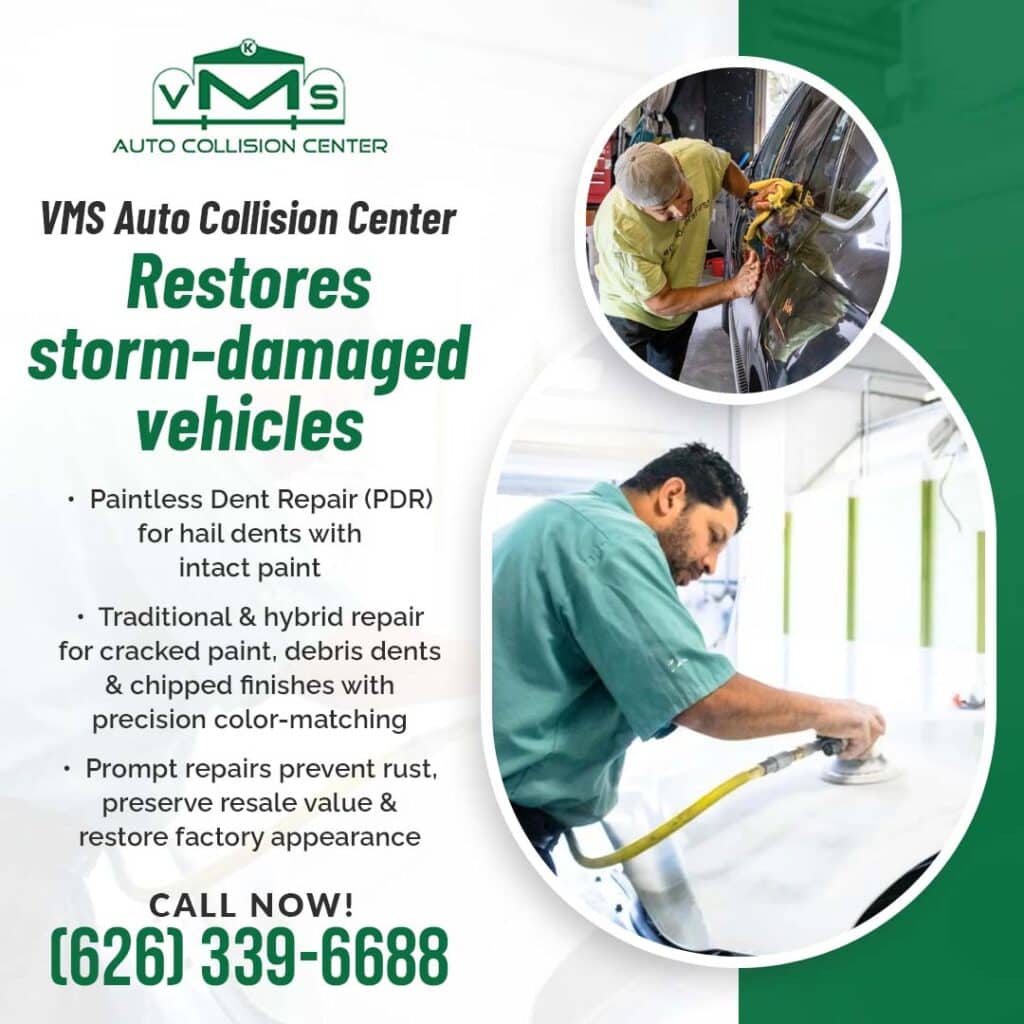
VMS Auto Collision Center: Storm Damage Repair in Covina
Spring storm damage is a predictable part of vehicle ownership in Southern California. Acting promptly after a storm, inspecting carefully, documenting thoroughly, and working with a qualified body shop produces the best outcome for your vehicle and your insurance claim.
VMS Auto Collision Center has been a trusted name in auto body repair services across Covina and the surrounding communities since 1989. Our I-CAR Gold Class certification, the automotive industry’s highest standard for collision repair training, and our BBB A+ rating reflect the standards we apply to every repair we perform.
For hail damage where paint remains intact, our technicians use Paintless Dent Repair to restore affected panels without disturbing the factory finish. For dents involving cracked or chipped paint, we perform traditional auto body repair, including metal reshaping, body filler application, and computerized paint matching to produce a seamless result. When a vehicle presents both types of damage, we apply a hybrid approach, using PDR where the paint is intact and targeted refinishing where it is not.
Beyond the physical repairs, our team handles the full insurance process on your behalf, from initial damage documentation and estimate submission through adjuster coordination and supplemental claim filing. When spring storms leave their mark on your vehicle, our Covina auto body shop is ready to restore it to its pre-storm condition, backed by our Limited Lifetime Warranty valid for as long as you own your vehicle.
Schedule Your Storm Damage Assessment at VMS Auto Collision Center
Contact VMS Auto Collision Center today at (626) 339-6688 or info@vmsautocollision.com to schedule a professional damage assessment. Our team is ready to walk you through every step of the repair and insurance process. All repairs performed at our Covina auto body shop are backed by a Limited Lifetime Warranty, valid for as long as you own your vehicle.