
Every collision tells a different story through the damage it leaves behind. A fender bender in a parking lot creates entirely different repair needs than a highway-speed impact, yet both require professional evaluation to identify all affected components. Understanding what happened to your vehicle during an accident helps you make informed decisions about the restoration process and recognize when surface-level fixes fall short of resolving underlying safety concerns.
VMS Auto Collision Center has been family-owned and operating in Covina since 1989, providing professional collision repair services backed by decades of experience. This experience has taught us that automotive collision damage typically falls into these distinct categories: front-end impacts, rear-end collisions, side impacts, paint and surface damage, and undercarriage problems. Each category involves unique challenges requiring specific diagnostic equipment, repair techniques, and quality verification procedures that separate professional restoration from basic bodywork.
Front-End Collision Damage
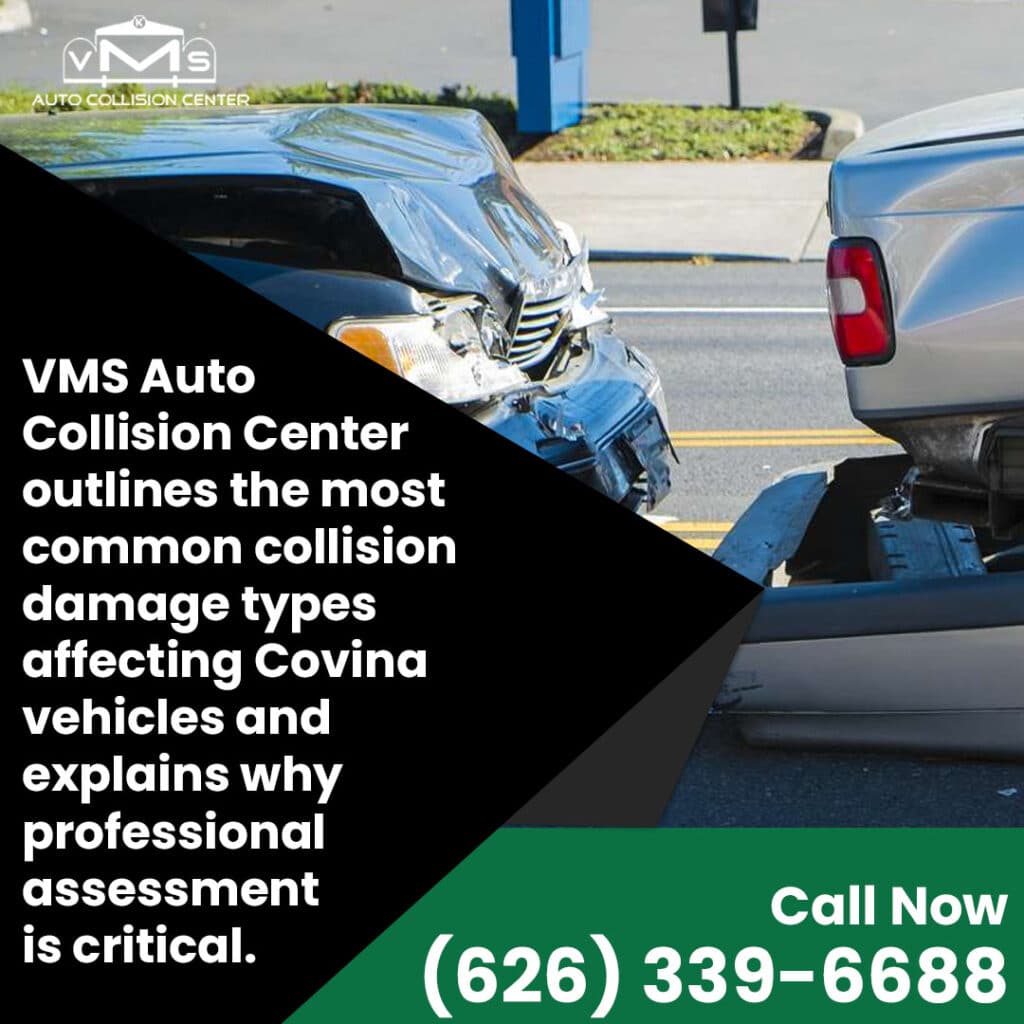
Front-end impacts represent one of the most common damage types we repair. Front-end damage affects the bumper, hood, fenders, headlights, radiator, and potentially the frame rails that form the vehicle’s primary crash structure.
The severity ranges from minor bumper scratches to complete front-end destruction requiring frame rail replacement. Even low-speed parking lot impacts can damage hidden components like crash sensors, air conditioning condensers, and transmission coolers mounted behind the bumper cover.
Components Typically Affected in Front Impacts
Bumper System Components
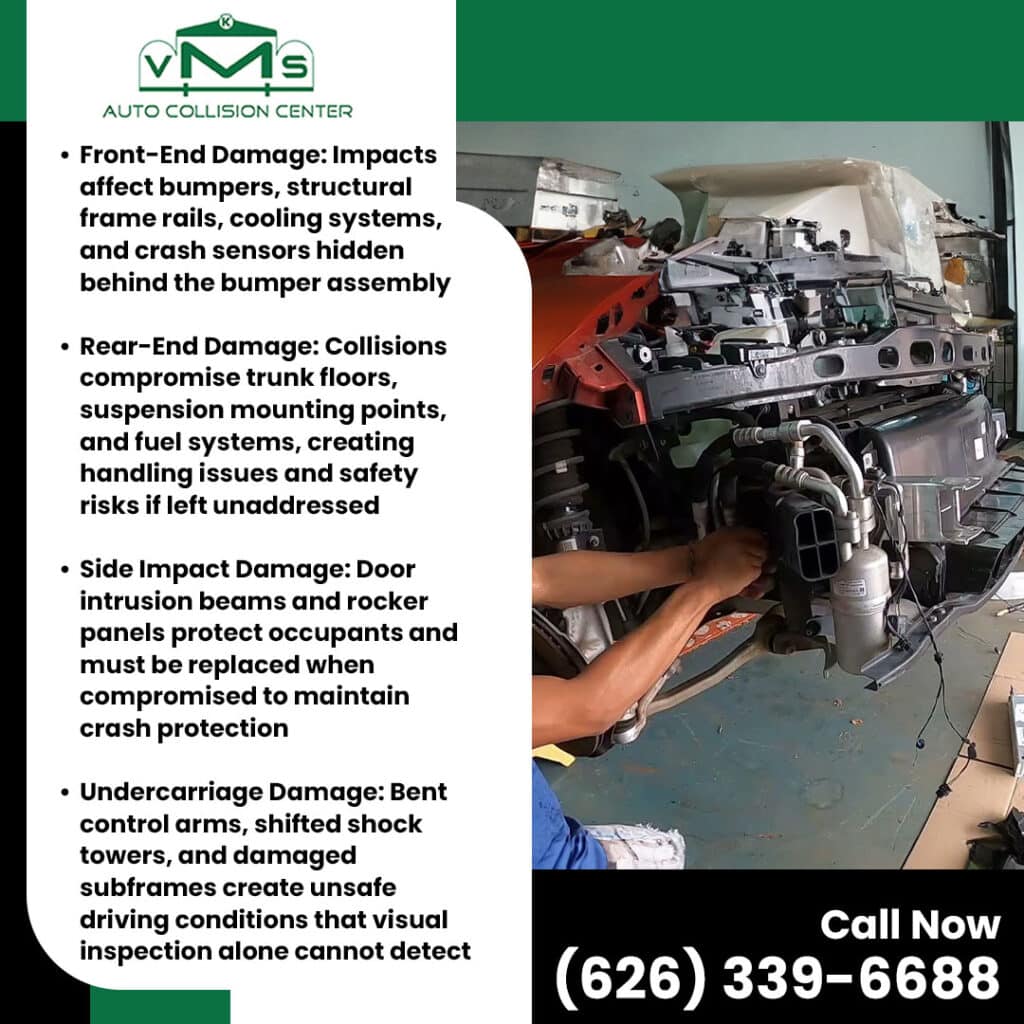
Modern front bumpers contain multiple layers of protection working together. The outer bumper cover provides aesthetics and minor impact absorption. Behind this sits a reinforcement bar, often made from steel or aluminum, designed to distribute impact forces. Energy absorbers made from foam or plastic crush during impacts to reduce the force transmitted to the vehicle structure. Crash sensors mounted within the bumper assembly trigger airbag deployment and record impact data.
Cooling System Elements
Radiators and cooling system components sit directly behind the bumper assembly. Even minor front-end impacts can puncture radiators, damage cooling fans, or disconnect hoses and electrical connections. Air conditioning condensers mount in front of radiators and often sustain damage that goes unnoticed until the system fails to cool properly. Transmission cooler lines and various hoses create a complex network of components that can disconnect or break during impacts.
Structural Components
Frame rails extend from the front bumper area rearward through the engine compartment. These structural members absorb crash energy through controlled deformation. Damage to frame rails compromises the vehicle’s ability to protect occupants during subsequent collisions. Front cross members, shock tower mounting points, and engine cradles all contribute to the vehicle’s structural integrity and may require assessment after frontal impacts.
Lighting and Electrical Systems
Headlight assemblies in modern vehicles include adaptive lighting features that turn with the steering wheel, automatic leveling that adjusts beam height based on vehicle load, and daytime running lights. Impact damage can affect housing integrity, lens clarity, mounting brackets, and the electrical connections that power these systems.
Rear-End Collision Damage
Rear-end collisions create distinct damage patterns that affect both appearance and functionality. Rear impacts damage the trunk, rear bumper, tail lights, rear body panel, and potentially the rear suspension mounting points or fuel system components.
The rear structure of modern vehicles includes crumple zones designed to absorb energy during impacts. These areas crush in a controlled manner to reduce forces transmitted to the passenger compartment. Once damaged, they cannot provide the same protection in future accidents without proper auto collision restoration.
Hidden Damage in Rear Collisions
- Trunk Floor and Suspension Mounting: Trunk floors often sustain damage that affects rear suspension geometry. The shock towers, where rear struts or shocks mount, can shift position during impacts, changing suspension alignment angles. This damage causes tire wear, handling problems, and reduced ride quality.
- Fuel System Components: Fuel tanks mount beneath the rear floor in most vehicles. Impact forces can damage fuel tank mounting straps, puncture tanks, or damage fuel pumps and sending units inside the tank. Fuel system damage creates fire risks and requires immediate attention during auto collision repair.
- Structural Support Areas: Spare tire wells and cargo area floors provide structural support. Buckled metal in these areas indicates forces strong enough to potentially affect frame rail alignment. A professional assessment at an auto collision shop identifies whether structural work is needed beyond cosmetic panel replacement.
- Electrical System Damage: Electrical systems in the rear include tail lights, backup cameras, parking sensors, and trunk release mechanisms. Wiring harnesses running through damaged areas may suffer cuts, tears, or connection failures that prevent proper system operation.
Side Impact Damage
Side collisions create particularly concerning damage because of the limited space between the impact point and vehicle occupants. Side impact damage affects doors, rocker panels, quarter panels, side mirrors, and the door intrusion beams designed to protect occupants.
The forces involved in side impacts transfer directly into the passenger compartment with less structure to absorb energy compared to front or rear crashes. This makes proper structural restoration particularly important for maintaining occupant protection.
Door and Rocker Panel Damage
- Door Intrusion Beams: Doors contain structural reinforcement beams running horizontally through their center. These intrusion beams prevent door collapse during side impacts, creating a critical barrier between the impact point and vehicle occupants. Damaged intrusion beams must be replaced rather than straightened because any weakening compromises their protective function in future collisions.
- Door Skin Damage: Door skins (the outer panel) can often be replaced without changing the door structure itself. This repair involves drilling out spot welds, removing the damaged skin, welding a new skin in place, and refinishing the door. The approach maintains the door frame when the internal structure remains undamaged, providing a more economical repair option.
- Rocker Panel Damage: Rocker panels run beneath the doors along the vehicle’s lower edge. These structural members connect the front and rear sections of the vehicle’s unibody construction, contributing to overall vehicle rigidity and side impact protection. Damage to rocker panels indicates severe side impact forces that likely affected multiple structural components, including floor pans and door openings.
- Window Mechanism Damage: Window mechanisms inside doors can sustain damage from impact forces even when the door appears intact externally. Regulators, motors, and tracks may bend, break, or misalign, preventing proper window operation. Impact forces can also crack window glass or cause seals to separate from their mounting channels.
Paint and Surface Damage
Paint damage ranges from minor scratches affecting only the clear coat to deep gouges exposing bare metal. Surface damage affects vehicle appearance, corrosion protection, and resale value while sometimes indicating underlying structural problems.
Modern automotive paint consists of multiple layers: primer for adhesion and corrosion protection, base coat for color, and clear coat for gloss and UV protection. Each layer serves specific functions that must be restored during refinishing.
Types of Paint Damage
- Clear Coat Scratches: Clear coat scratches appear as light marks that haven’t penetrated to the color layer beneath. These surface scratches catch light differently than the surrounding finish, creating visible lines across panels. Minor clear coat damage often responds to polishing that removes a thin layer of material, bringing the surrounding area to the same level as the scratch depth.
- Base Coat Damage: Base coat damage exposes the primer beneath colored paint, revealing gray or reddish underlayers. These scratches require repainting because polishing cannot restore the missing color. The affected panel needs sanding, primer application if metal is exposed, color coat application matched to the surrounding paint, and clear coat finishing to restore protection.
- Scrapes and Scuffs: Scrapes and scuffs from parking incidents, shopping carts, or other vehicles create surface marks that may only affect the clear coat. Paint transfer from other vehicles can sometimes be removed through careful cleaning. Deeper scrapes that penetrate through multiple paint layers require repainting. Proper assessment determines whether polishing, spot repair, or complete panel refinishing provides the best results.
Undercarriage and Mechanical Damage
Undercarriage damage affects components beneath the vehicle that protect mechanical systems and contribute to structural strength. Impact damage can affect the suspension, exhaust system, fuel lines, brake lines, and subframe structures that support major assemblies.
Low-clearance scrapes, curb impacts, and road debris strikes cause undercarriage problems. These incidents may seem minor, but they can create safety hazards and expensive repair needs if unaddressed.
Suspension Component Damage
- Control Arm Damage: Control arms connect wheels to the vehicle frame while allowing suspension movement through rubber bushings at mounting points. These components bend or crack during impacts, changing suspension geometry in ways that cause tire wear and handling problems. Bent control arms cannot be straightened safely and require replacement because any weakening creates failure risks during driving.
- Shock Tower Damage: Shock towers provide mounting points for struts or shock absorbers, attaching the suspension to the vehicle body. Damage to these structures affects suspension operation and can indicate frame damage requiring more extensive repair. Shifted shock tower positions change suspension angles beyond the adjustment range, making proper wheel alignment impossible until structural repairs restore tower positions.
- Subframe Damage: Subframes bolt to the vehicle’s main structure and provide mounting points for engines, transmissions, and suspension components. These substantial assemblies can shift position during collisions, affecting alignment, driveline operation, and structural integrity. Subframe mounting bolts can stretch or break under impact forces, while the metal surrounding mounting holes can tear.
- Steering System Damage: Steering components, including tie rods, steering racks, and linkages, can bend or break during undercarriage impacts. Damaged steering parts create dangerous handling conditions, including steering wheel play, vehicle wandering, and unusual noises when turning. These problems require immediate attention for safe vehicle operation.
Why Professional Assessment Matters After Any Collision
Many vehicle owners underestimate damage severity because they judge problems by visible exterior signs alone. This approach misses critical safety issues that develop beneath the surface and worsen over time without proper attention.
The Limitations of Visual Inspection
Visual inspection cannot reveal whether frame rails are bent, spot welds failed, or crash sensors sustained damage. Modern vehicles hide structural components beneath plastic covers, sound-deadening materials, and interior trim panels. What appears as minor exterior damage may accompany serious structural problems requiring computerized measurement to identify. A small dent in the wrong location can indicate frame damage, while extensive body panel destruction might leave the underlying structure intact.
Initial assessments by insurance companies often rely on visual inspection and estimating software. These methods miss hidden damage that becomes apparent only during disassembly. Supplemental damage discovered after repairs begin creates delays and complications that a thorough pre-repair inspection prevents. Professional auto collision shops use diagnostic equipment, including computerized frame measurement systems and electronic scanning tools, to identify all damage before work begins.
The Risks of Incomplete Collision Repairs
Inadequate repairs that address only visible damage while ignoring structural issues create problems that worsen over time. When shops fail to properly assess collision damage or skip necessary structural work, the consequences affect vehicle safety, performance, and value long after the initial repair.
Hidden structural damage progressively deteriorates, eventually requiring more extensive work than thorough initial repairs would have needed. Suspension components forced to operate outside their designed geometry wear out prematurely. Wheel bearings, ball joints, and tie rod ends fail earlier than expected. Electronic systems damaged during the collision but left unrepaired fail unpredictably, creating safety hazards during normal driving.
Vehicle history reports document accident involvement and repairs, directly affecting resale values. Proper repairs with complete documentation minimize depreciation by proving that restoration met professional standards. Incomplete repairs discovered during pre-purchase inspections reduce vehicle value and may prevent the sale entirely. Insurance companies increasingly require certification and documentation for auto collision repair. Vehicles repaired at non-certified auto collision shops may face coverage questions when subsequent damage occurs, leaving owners responsible for repair costs that insurance should have covered.
The VMS Approach to Collision Repair in Covina
Our six-step auto collision repair process addresses all damage types systematically while maintaining quality standards throughout restoration. This structured approach prevents oversights and delivers consistent results.
Inspection and Estimation
We thoroughly assess your vehicle to determine the extent of damage and suggest safe repair options. Computerized frame measurement identifies structural issues invisible during visual inspection. Electronic system scanning reveals safety system damage that could compromise protection during future accidents.
Auto Body Repairs
Our skilled technicians carry out required repairs to return your vehicle to its original condition. We follow manufacturer-specific procedures for your vehicle’s construction materials. High-strength steel requires cold straightening methods. Aluminum demands separate welding equipment and different techniques from steel construction.
Painting
At VMS Auto Collision Center, we utilize modern equipment and high-quality paint to refinish your vehicle with a perfect color match. Our climate-controlled booth eliminates environmental variables affecting finish quality. Spectrophotometric analysis identifies exact paint formulations accounting for sun exposure and production variations.
Reassembly
We use OEM and certified parts to restore your vehicle to its pre-accident condition for fit, finish, durability, and safety. All fasteners receive manufacturer-specified torque values during installation.
Quality Control
The quality control team at VMS Auto Collision Center carries out detailed inspections to verify that all repair work meets high standards. We examine frame dimensions, panel alignment, paint quality, and system functionality before considering the work complete.
Detailing and Delivery
Once your vehicle has been cleaned and prepared for pickup, we offer a detailed walkthrough to examine the repairs and verify satisfaction prior to delivery.
This structured process at VMS Auto Collision Center reflects the specialized approach that quality collision repair in Covina demands. Our I-CAR Gold Class certification, BBB A+ rating since 2019, and Mazda Collision Network certification demonstrate our commitment to restoration that meets manufacturer standards. Our Limited Lifetime Warranty covers workmanship and materials for as long as you own your vehicle, preventing the long-term problems that result from inadequate automotive collision repairs.
Contact VMS Auto Collision Center
Understanding collision damage types helps vehicle owners recognize when professional services are needed. Each damage category requires specific expertise and equipment for proper restoration that protects safety and maintains vehicle value.
VMS Auto Collision Center has provided collision repair in Covina since 1989. Our family-owned business combines three generations of experience with modern repair technology and manufacturer certification. Contact us at (626) 339-6688 or email info@vmsautocollision.com for damage assessment. We coordinate with insurance companies, arrange rental vehicles through our partnerships, and guide you through the entire repair process.