
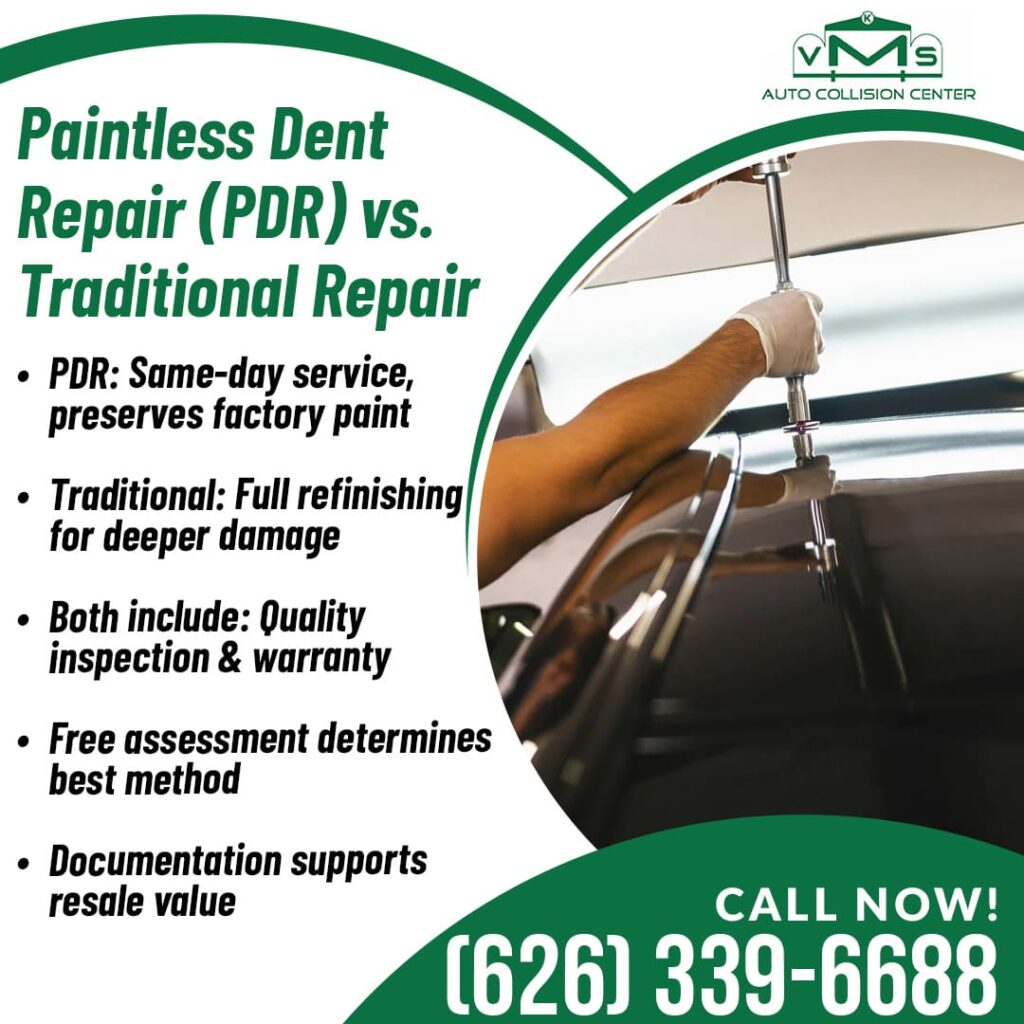
Dent repair follows a structured process that varies based on damage type and the repair method selected. Paintless Dent Repair (PDR) typically completes in hours to one day for minor damage, while traditional dent repair requiring paint work takes multiple days due to curing requirements. Understanding each stage helps you know what happens to your vehicle, why certain steps take time, and what quality standards apply throughout the process.
At VMS Auto Collision Center, we have refined our approach over 35 years of serving Covina and the surrounding communities. This walkthrough explains what actually happens from the moment you bring your vehicle in until you drive away with restored panels. Whether you need quick PDR for a door ding or full traditional repair for more serious damage, these steps show exactly what to expect.
Understanding Your Dent Repair Journey
Professional car dent repair involves more than simply pushing metal back into place. The process begins with a detailed assessment, continues through careful restoration work, and concludes with thorough quality verification. Your experience depends on damage characteristics, repair method selection, and facility standards.
PDR preserves original factory paint through specialized techniques, while traditional approaches restore panels requiring refinishing. Both methods follow systematic procedures protecting your vehicle and delivering lasting results. The following sections walk you through each stage, explaining what happens at every step and why certain procedures matter for proper restoration.
Initial Damage Assessment and Method Selection
Your car dent repair begins with a detailed damage evaluation. Technicians examine affected panels under specialized lighting to identify all deformations, including subtle damage invisible under standard conditions.
Assessment determines which repair approach works for your specific damage. PDR works by manipulating metal back into shape from behind panels without disturbing paint. Traditional repair involves metal reshaping, filler application, and complete refinishing when paint damage exists or dents exceed PDR limitations.
Paint Integrity Evaluation
Technicians check paint conditions using multiple methods. Visual inspection identifies obvious cracks, chips, or clear coat damage. Paint thickness gauges measure coating depth at multiple points around damaged areas.
Factory paint typically measures 4-7 mils thick. Thicker readings indicate previous repairs that may have compromised paint flexibility. Thinner readings suggest increased cracking risk during metal manipulation.
Paint flexibility matters because PDR requires metal movement. Modern basecoat/clearcoat systems bend slightly without cracking. Older paint or refinished surfaces often crack when metal flexes, eliminating PDR as an option.
Dent Characteristic Analysis
Size, depth, and shape determine repair feasibility. Round, bowl-shaped dents under six inches in diameter with depths less than one-quarter inch typically qualify for PDR. Sharp creases, linear damage, or deep impacts exceeding these parameters require traditional approaches.
Location affects method selection. Door panels, hoods, and deck lids provide easy backside access for PDR tools. Quarter panels need interior trim removal for access. Roof pillars and body panel edges contain double-wall construction, blocking tool positioning.
Written Estimate and Timeline Discussion
Professional facilities provide detailed written estimates before work begins. Estimates specify which panels require attention, the repair method for each area, and material requirements if refinishing becomes necessary.
Understanding factors that affect the dent repair cost helps set realistic expectations. Damage extent, repair method selection, and panel accessibility all influence final estimates. PDR typically involves lower expenses than traditional refinishing due to reduced material requirements and shorter labor times.
Timeline estimates account for repair complexity. Simple PDR completes quickly, often the same day, for single dents with clear access. Multiple dents across several panels extend PDR work. Traditional repair requiring paint takes longer because each coating layer needs a specific curing time before subsequent applications.
Paintless Dent Repair Process Walkthrough
PDR preserves original factory paint through careful metal manipulation. This approach works for damage meeting specific criteria identified during assessment.
Access Point Preparation
Technicians begin by creating or using existing access points to position tools behind damaged metal. Door panels typically remove easily through standard fasteners. Hood and trunk repairs access through existing openings, like latch mechanisms or reinforcement gaps.
Quarter panel PDR may require interior trim removal, trunk liner displacement, or tail light assembly extraction. Technicians protect surrounding areas with specialized covers, preventing scratches during panel removal and tool positioning.
Lighting System Setup
Professional PDR depends on advanced lighting. Technicians position LED light boards and reflective panels at specific angles relative to damaged areas. These systems reveal deformations invisible under standard lighting, guiding accurate metal reshaping.
Metal Manipulation Technique
PDR tools include various rods, picks, and specialized instruments. Technicians select tools based on access points and dent characteristics. They position instruments behind the damage and apply controlled pressure at precise locations.
The process works gradually. Small pressure applications slowly move metal toward the original position. Technicians constantly check progress under specialized lighting, adjusting pressure points based on metal response.
Glue Pull Applications
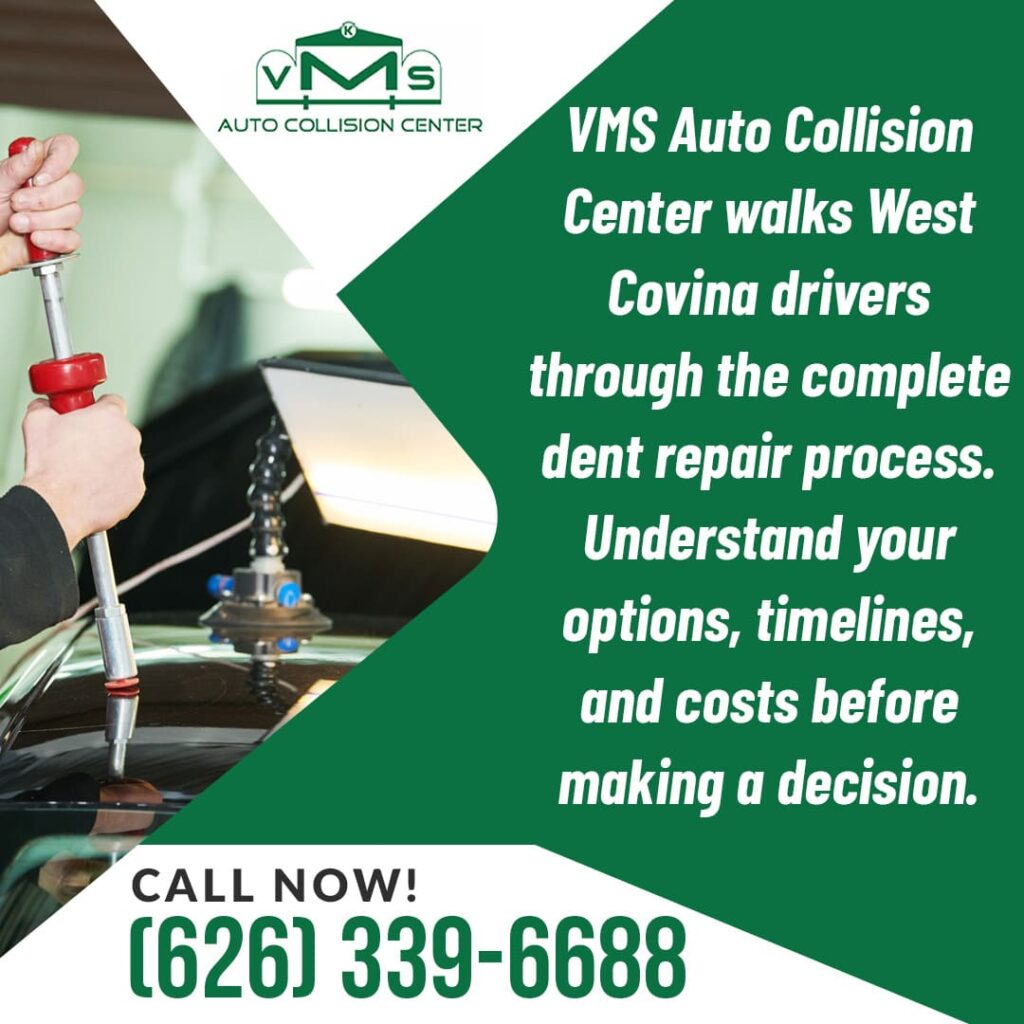
Some dents require glue pulling when backside access proves impossible. Technicians attach specialized tabs to damaged surfaces using hot glue formulated for automotive paint. They apply pulling force through slide hammers, gradually drawing metal outward.
This technique works for door edges, roof rails, and body line dents where conventional tool access fails. After reshaping, technicians remove glue residue using safe solvents that don’t affect the factory clear coat.
Traditional Dent Repair Process for Paint-Damaged Areas
Traditional dent repair becomes necessary when paint damage exists or metal stretching exceeds PDR capabilities. This approach involves more steps and longer completion times, which factor into dent repair cost considerations due to additional materials and extended labor requirements.
Damaged Area Preparation
Technicians begin by cleaning affected surfaces thoroughly. They remove any loose paint, rust, or contaminants that interfere with proper adhesion. Sanding follows cleaning, progressing through different grit levels from coarse to fine.
Initial sanding removes damaged paint and creates a proper surface texture for subsequent materials. Technicians feather the edges where original paint meets repair areas, creating gradual transitions that prevent visible repair boundaries.
Metal Reshaping and Straightening
Damaged metal requires reshaping before filler application. Technicians use specialized hammers, dollies, and metal shaping tools to restore approximate panel contours. This metalwork brings damaged areas close to the original shape, minimizing filler thickness requirements.
Proper metalwork matters because excessive filler creates durability problems. Professional repairs use minimal filler over properly shaped metal.
Body Filler Application and Shaping
After metalwork, technicians mix body filler according to the manufacturer’s specifications. They apply thin layers over prepared surfaces using plastic spreaders that create smooth, controlled applications.
Cured filler undergoes progressive sanding, starting with coarse grits for major shaping, moving through finer grits for surface smoothing. Technicians check progress frequently to achieve smooth surfaces ready for primer.
Primer and Paint Application
Primer seals bare metal, preventing rust, provides adhesion for paint, and fills minor surface imperfections remaining after sanding. Application happens in controlled spray booth environments where temperature and humidity regulation prevent problems like runs or improper adhesion.
Color matching requires specialized technology. Professional facilities use spectrophotometers (devices measuring color at multiple points) on your vehicle to account for paint fading from sun exposure and weathering.
Base coat application happens in multiple thin layers. Technicians maintain specific spray gun distance and angle, producing smooth, even coverage. Clear coat provides gloss and protection, with multiple layers building film thickness matching factory specifications.
Paint Curing Requirements
Fresh paint requires proper curing before vehicle return. Ambient temperature curing takes 24-48 hours for safe handling and 7-14 days for complete hardness. Some facilities use heated spray booths, accelerating cure times while maintaining quality.
Premature vehicle return risks paint damage. Fresh paint remains vulnerable to scratching, water spotting, and chemical damage during early curing stages. Professional facilities only release vehicles after paint reaches safe handling hardness.
Quality Control and Final Inspection Steps
Professional facilities inspect completed work before customer notification. Quality control catches issues requiring correction before vehicle return.
Multi-Point Inspection Process
Technicians examine repairs under various lighting conditions to reveal surface imperfections invisible under single lighting sources. The inspection includes:
- Proper dent elimination verification
- Smooth surface transitions
- Accurate color match assessment
- Protective coating integrity
- Panel gap and alignment verification
- Door, hood, and trunk lid operation with proper spacing
Adjustments correct any misalignment resulting from repair procedures.
Paint Finish Quality Verification
Clear coat inspection checks for dust contamination, runs, sags, or improper coverage. Minor imperfections undergo correction through wet sanding and buffing, while serious problems require clear coat removal and reapplication.
Color match verification happens under both natural daylight and artificial lighting. Paint should blend seamlessly into adjacent panels without visible boundaries. Metallic and pearl finishes require particular attention because the viewing angle affects appearance.
Functional Testing
Technicians test all affected systems to verify proper operation:
- Parking sensors, backup cameras, and collision avoidance systems
- Electrical connections (when wire harness removal or relocation occurred)
- Door locks, handles, and latches
- Window regulators (if door panel removal occurred)
Any functional issues identified during testing receive correction before customer contact.
Vehicle Detailing and Delivery Preparation
Clean vehicles demonstrate professional care and allow proper repair inspection during customer walkthrough.
Exterior and Interior Restoration
Technicians wash entire vehicles, removing dust, overspray, and handling marks. They clean windows, wheels, trim pieces, and repaired areas to eliminate any buffing compound residue or masking tape adhesive.
Interior cleaning returns vehicles to pre-repair condition. Technicians vacuum carpet and seats, wipe interior surfaces, and reinstall all removed trim pieces with proper fit and secure attachment.
Documentation Preparation
Professional facilities photograph completed repairs showing dent elimination and quality finish. These images provide records demonstrating work quality while giving customers visual evidence of thorough restoration.
Written documentation includes repair procedures performed, parts replaced if any occurred, paint products used, and warranty information. This paperwork becomes part of the vehicle service history.
Customer Walkthrough and Vehicle Return
Professional delivery includes a detailed inspection with customers present. This walkthrough allows questions and verification that the work meets expectations.
Repair Explanation
Technicians explain work performed, showing repaired areas and describing methods used. They point out quality indicators like smooth surface transitions, accurate color matching, and proper protective coating application.
This explanation helps customers understand the value received beyond simple dent removal. Professional car dent repair restores structural integrity, protective finishes, and factory appearance standards.
Care Instructions for Fresh Repairs
Technicians provide care recommendations that protect repairs during initial periods. Fresh paint needs special attention, avoiding automatic car washes for 30 days, preventing harsh chemical exposure, and using gentle hand washing techniques.
Traditional repairs benefit from wax application after 60-90 days once the paint fully cures. This protection maintains finish quality and prevents premature weathering.
Warranty Information Review
Professional facilities provide written warranty documentation covering completed work. At VMS Auto Collision Center, we offer a Limited Lifetime Warranty on all dent repairs near West Covina, demonstrating our confidence in workmanship quality.
Warranty terms specify coverage scope, claim procedures, and any maintenance requirements. Customers should understand the protection provided and how to obtain warranty service if problems develop.
When Additional Work Gets Discovered During Repair
Hidden damage sometimes appears after repair begins. Metal bending creates stress patterns invisible during initial assessment. Paint removal reveals rust or previous repair work affecting the current restoration.
Professional facilities contact customers immediately when additional work becomes necessary. They explain newly discovered issues, provide supplemental estimates, and obtain approval before proceeding. This transparency prevents billing disputes and maintains trust.
Insurance claims may require supplemental approvals. Facilities coordinate with adjusters, providing documentation supporting additional repair needs. This advocacy protects customer interests while expediting approval processes.
Professional Dent Repairs Near West Covina
VMS Auto Collision Center has served the community for over 35 years with expert dent repair services. Our I-CAR Gold Class certification and BBB A+ rating demonstrate commitment to industry-leading standards.
We provide both PDR and traditional approaches, eliminating bias toward specific methods. Our recommendations prioritize your vehicle’s needs based on damage characteristics rather than facility convenience. Transparent estimates help you understand dent repair cost factors before work begins.
We use modern equipment, including professional spray booths, specialized PDR tools, and computerized paint matching systems to deliver results meeting manufacturer specifications. Our family-owned operation combines multi-generational experience with current repair technologies.
Insurance claim assistance streamlines the repair process. We coordinate directly with adjusters, prepare required documentation, and expedite approvals, reducing stress during vehicle restoration.
Schedule Your Assessment Today
Understanding what happens during the repair process helps you select qualified providers and set realistic expectations. Professional facilities follow systematic processes protecting your investment while delivering lasting results.
Contact VMS Auto Collision Center at (626) 339-6688 or email info@vmsautocollision.com to schedule your free damage assessment. We’ll examine your vehicle thoroughly, explain repair options clearly, and provide transparent information about methods and procedures.
At VMS Auto Collision Center, we deliver expert restoration backed by a Limited Lifetime Warranty. Local drivers choose our family-owned facility for professional dent repairs near West Covina because we prioritize quality workmanship and transparent communication throughout every repair.